
Meet 2025 Infection Science Award winner: Dr Elizabeth O'Gorman
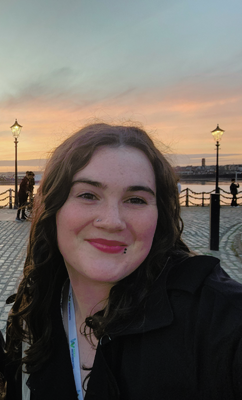
What are your current research interests?
Overall, my research focuses on biofilms. During my PhD, I studied Campylobacter biofilms under conditions that mimic the food processing chain. Since finishing my PhD, I am now researching biofilm formation in drainpipes and ways to disinfect and remove them.
What inspired you to go into this field?
Before I began my undergraduate studies, I was planning on getting a degree in science and then going to medical school. However, I soon realised that I didn’t only want to treat people to make them better; I also wanted to understand why they became ill. That led me to microbiology classes and from there, the research lab. I found that I really enjoyed research, and I could help people by increasing the understanding of bacteria that cause diseases.
What do you love most about your job?
The variability! Results in the lab can lead you to go in several different directions; it is rare that I am doing the exact same experiments month to month. I enjoy coming up with new experiments to continue building upon my research, it always makes going to the lab something I look forward to every day.
Why does microbiology matter?
Microbes, especially bacteria, are among the oldest living organisms on Earth – it’s estimated that they’ve been around for nearly 4 billion years. Microbes have shaped human history, from the Black Death in Europe to the smallpox epidemic that decimated the Incan Empire. Luckily, scientists have developed vaccines and antibiotics to prevent the loss of life that occurred in the past. Since microbes can evolve to overcome these defences, it is important to keep studying them to prevent history from repeating itself.
How has getting involved with the Microbiology Society activities benefited your professional development?
I have been attending Annual Conference for years. It is a fantastic opportunity to gain confidence via poster or showcase presentations, as well as help grow your professional network. The ECM social night at the conference is my favourite event. I have made some great friends and contacts that I have used throughout my PhD. In addition, listening to other presentations has sparked new ideas for my research. I always leave the conference feeling excited to apply these new ideas to my research.
You can find and follow Elizabeth on LinkedIn: Elizabeth O.