
International Day of Persons with Disabilities: Iga Wieczorek
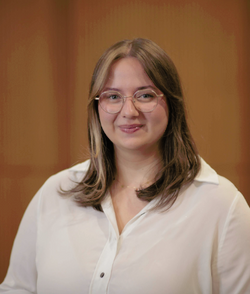
Hello! My name is Iga Wieczorek (she/they). I’m currently a PhD student at the University of East Anglia, UK, investigating the microbiome-gut-brain-axis in wild avian populations through designing probiotics to understand the microbiome’s role in behaviour and physiology.
Every year, Disability History Month and the International Day of Persons with Disabilities offer a good time for reflection on how far we’ve come (and how far we still have to go) in building a world where Disabled people can thrive. As someone who works within scientific research, this month is an important time to champion awareness of accessibility, representation and inclusion in STEM. For many Disabled people, scientific research/academia can be a challenging environment to navigate.
Personally, these dates carry a lot of weight. As someone with invisible chronic illnesses, neurodivergence and mental health conditions, I know first-hand how disability shapes how we move through academia. These experiences have shaped how I see the scientific community too; full of potential but structured around ‘typical’ bodies, minds and working patterns. I can only speak from my own experience, but supporting other scientists living with disabilities has given me a broad range of experiences to speak to. This blog covers challenges I have faced in research and academia, ways to tackle inaccessible aspects of our communities, and what each of us can do to make the workplace a more inclusive space for everyone.
Challenges
I didn’t realise I counted as a Disabled scientist until recently because all of my conditions are invisible, and that’s my first point! My conditions fluctuate in severity, and don’t have a visible marker of disability, which means people don’t think of my as Disabled, and I am sometimes placed in the position of having to justify my needs. People with invisible disabilities may not feel empowered to ask for accessibility accommodations or even know what would help them, if they have been diagnosed later in life. This is often because such adjustments have been met with scepticism in the past. The cycle of repeatedly explaining your condition, anticipating disbelief and worrying that others will interpret symptoms as laziness can be exhausting. Compounding this is the presence of attitudinal barriers; beliefs held by peers, academics, or institutions about what Disabled people can or cannot do. The misconceptions I hear most often are implications that accommodations are ‘special treatment’, assumptions that a Disabled colleague is less committed to the job and surprise when Disabled people excel in their field. These all contribute to an environment where individuals feel far from included and supported. These biases shape interactions, opportunities and self-perception, creating a constant undercurrent of pressure to ‘prove’ yourself worthy of belonging in scientific spaces.
All of this takes place within an academic and research culture structurally designed for non-disabled, neurotypical people. Science praises long days in the lab, strict schedules, tightly packed deadlines and a fast-paced output. This, however, assumes all bodies and brains perform in predictable ways, maintain focus on demand, recover quickly from stress and push through discomfort. But what if you’re pushing through discomfort just to show up and exist most days? For people with disabilities (but also non-disabled neurotypical folks!) these expectations are unsustainable and harmful. It becomes second nature to feel perpetually behind, even when you’re working twice as hard to keep up. From personal experience, the pressure to match the pace and output of non-disabled neurotypical peers can lead to burnout and ultimately drives talented people out of science altogether.
What needs to change?
Too often, accessibility is treated as a box-ticking exercise, or something to retrofit once the barriers have already caused harm. Instead, labs, fieldwork opportunities, classrooms and digital resources should be intentionally designed with access in mind. This includes everything from adjustable lab benches and quiet workspaces to captioned lectures, accessible layouts on slides, sensory-considerate environments and transparent expectations around workload.
Creating a more inclusive scientific community requires moving beyond performative statements
and toward genuine structural change. At the heart of this is the need to normalise flexibility. Academia still operates on the assumption that everyone can work with consistent energy, predictable concentration and long hours – this assumption excludes many Disabled people, including those with fluctuating conditions like chronic migraines, and those who experience variable focus and executive function, like ADHD – both of which I live with. Flexible deadlines, hybrid participation options, varied assessment styles and clear communication around output are essential adjustments that allow people to work in ways aligned with their bodies and minds. Crucially, these forms of flexibility benefit everyone, not just Disabled students. When accessibility is built in, rather than awkwardly added on as an afterthought, it prevents exclusion before it happens.
Additionally, academia must confront ableism directly, rather than leaving it to Disabled individuals to challenge harmful comments or unfair assumptions, not to mention it can be difficult to challenge ableist comments when they’re directed towards you. Luckily, I haven’t dealt with much overt bias, but instead ableism disguised as jokes about laziness, remarks about 'not looking ill’ and being told by academics that they ‘don’t make exceptions’ when approached about reasonable adjustments. It also shows up systemically, in the glorification of overwork, the stigma around requesting help and the idea that rest is a luxury instead of a necessity. Challenging these norms requires courage and awareness from all members of the scientific community, not just those who are personally affected.
Finally, representation matters. Disabled scientists should be visible not only in campaigns or awareness days, but also in leadership roles, research groups, teaching teams and conference panels. When we see others succeeding with chronic illness, neurodivergence or mental health conditions, it shows that we do belong in science. Visibility helps dismantle stereotypes about what a scientist ‘should’ look like or how they ‘should’ work, replacing outdated expectations for everyone.
What can you do?
Disability does not mean incapacity, and with a few small actions everyone can help cultivate a workplace where Disabled scientists can flourish:
- Ask what someone needs, rather than assuming.
- Amplify Disabled voices: share our work, invite us to speak at your institution, go to your institution's disability/neurodivergent group as an ally and ask questions!
- Believe people when they talk about their needs, even if their disability isn’t visible.
- Share resources in accessible formats (e.g., captions, alt-text, readable fonts). Written communication is important for many peoplewith neurodivergence and/or dealing with brain fog due to a chronic illness: for example, this can translate into a summary email with actionable items after a supervision meeting.
- Be mindful of pace and workload during meetings and lab sessions: check-in between topic changes to make sure everyone is comfortable, people have understood and nothing needs to be readdressed.
- Advocate when you can; if you notice barriers or ableist language, raise those issues with your line manager/supervisor, head of school or University and College Union (UCU)/Students’ Union representative. Complete your institution’s bystander intervention training which should cover ‘the 5Ds’ of being an active bystander (Distract, Direct, Delegate, Delay, and Document).
- Use inclusive communication: avoiding ableist language, giving content warnings and offering multiple ways to participate (good non-verbal options are Menti or Padlet). Ableist language can include intentional insults but, more often in professional settings, it presents in more subtle microaggressions like describing being particular as being ‘OCD’ (i.e. having obsessive-compulsive disorder); saying a Disabled person ‘suffers from’ or is a ‘victim of’ their condition; describing a decision as ‘crippling’; describing people or situations as ‘normal’ relative to Disabled people. The UCU has a good resource on this, but your institution should provide training on ableism and prejudice too (if they don’t, raise that!). The efficacy of content warnings has been questioned by some, but largely it’s a good idea to add them if speaking about a sensitive topic. In our field, content warnings typically show up before a presentation with gruesome medical images, or one discussing medical history which includes violence against a minority group.
You can read more blogs highlighting the challenges faced by microbiologists from historically marginalised backgrounds via our equality, diversity and inclusion blog listing.