
Announcing your prize winners – selected by members for Annual Conference 2027 in Birmingham
The Prizes recognise excellence and are awarded to those making significant contributions in the field of microbiology. Winners are selected for their work to advance understanding of microbiology and champion the contribution made by microbiology, our members and their work in addressing global challenges.
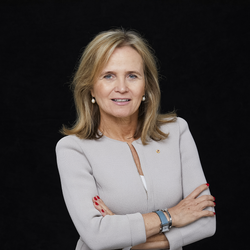
Prize Medal 2027: Professor Sharon Lewin
Professor Sharon Lewin is the inaugural director of the Peter Doherty Institute for Infection and Immunity, a joint venture between the University of Melbourne and Royal Melbourne Hospital; Melbourne Laureate Professor of Medicine, University of Melbourne; and the inaugural director of the Cumming Global Centre for Pandemic Therapeutics, Melbourne, Australia. The Cumming Centre was established following a philanthropic gift of $250 million from Canadian philanthropist Mr Geoff Cumming and $75 million from the Victorian government.
Professor Lewis is an infectious disease physician and virologist. She completed her medical degree and PhD in virology at Monash University in 1996, her infectious diseases training in Melbourne at the Royal Melbourne and Fairfield hospitals and her post-doctoral fellowship with Dr David Ho at Rockefeller University in 1999. She is recognised globally for her research aimed at finding a cure for HIV. She played a key role in Australia’s response to COVID-19 through the work of the Doherty Institute and senior advisory roles to the Victorian and Australian governments.
In 2014, she was named Melburnian of the Year, and in 2019, she was awarded Officer of the Order of Australia for services to infectious diseases and HIV/AIDS. She is the immediate past President of the International AIDS Society, which has 17,000 members globally. She holds honorary doctorates from La Trobe University, Monash University, Aarhus University in Denmark and University of Bonn in Germany.
She is President of the scientific advisory board of the ANRS/MIE (the major funding agency for infectious disease in France) and a member of the scientific advisory board for PREPARE (Singapore’s national pandemic preparedness programme) and the Stavros Nachos Foundation Institute for Global Infectious Diseases Research, based at Rockefeller University, New York.
Commenting on receiving the Prize Medal 2027, Professor Lewin said, "I am very excited to have been named the recipient of the Microbiology Prize Medal for 2027. I acknowledge the incredible microbiologists who have previously been awarded the prize and think I might be the first Australian and the first HIV virologist to join this esteemed group! Both of these firsts are exciting to me. I spent my early formative years training as a clinician scientist in Melbourne, followed by several years in New York and was extraordinarily lucky to have worked with some very talented and creative scientists who were passionate not just about discovery but about ensuring discoveries changed patients’ lives. I have loved being part of a global movement of HIV scientists, clinicians and community members which has always inspired my work. I want to acknowledge the many students, post-docs, senior scientists and clinicians I have worked with as well as many collaborators from across the globe. Each has played a very important role in the work my lab has been able to do and in ensuring we continue to ask the right questions.”
The Prize Medal is awarded to an outstanding microbiologist who is a global leader in their field and whose work has had a far-reaching impact beyond the discipline of microbiology. The recipient is awarded an engraved medal and £1,000 at the Society’s Annual Conference.
Equality, Diversity and Inclusion Prize 2027: Professor Emmanuel Adukwu
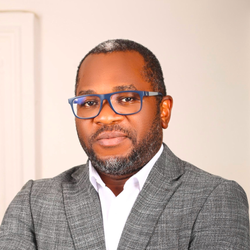
Professor Emmanuel Adukwu is Professor of Applied Microbiology at the University of the West of England, where he is also the Dean for Students. He studied for a BSc (Hons) degree in Biomedical Sciences from Coventry University and a Master of Science (by Research) from Manchester Metropolitan University, after which he joined the clinical research industry before embarking on a PhD in Applied Microbiology at the University of Northampton, focused on investigating community-acquired infections to identify new or alternative solutions to tackle pathogenic infections.
He has continued to pursue research in microbiology focused on infection control, stewardship of antimicrobial resistance and development of alternative and complementary solutions. As an academic, he has a strong student-centred philosophy that informs both his leadership practice and engagement with the wider scientific community. He was recognised for his student-centred work in innovative teaching with a Royal Society of Biology Bioscience Teacher of the Year Award in 2023.
Professor Adukwu is committed to advancing excellence in HE through inclusion, talent and pipeline development. He is a member of the board of trustees at Applied Microbiology International (AMI), the Founding Chair of the Minoritised Life Scientists Future Forum (MLSFF), a member of the American Society for Microbiology (ASM), maximising opportunities through the education committee and a member of the Medical Research Council’s (MRC) Black in Biomedical Research Advisory Group (BBRAG), among others.
Commenting on receiving the Equality, Diversity and Inclusion Prize 2027, Professor Adukwu said, “I am very delighted and honoured to receive the Microbiology Society EDI Prize, recognising my contributions to promote and advance equity. This award is not just for me but for the kind, selfless and unrelenting people, family, mentors, students, peers and colleagues at UWE Bristol and MLSFF who have opened doors and removed barriers for me and for many others to succeed in science and education.”
The Equality, Diversity and Inclusion Prize is awarded annually for good practice in and/or an outstanding contribution to initiatives that promote equality, diversity, and inclusion in the microbiological community and/or widen participation by those from historically marginalised communities by raising awareness of microbiology and inspiring the next generation of microbiologists to pursue microbiology careers. The recipients are awarded £1,000.

Marjory Stephenson Prize 2027: Professor Albert Osterhaus
Professor Albert Osterhaus was Head of the Department of Viroscience at Erasmus MC Rotterdam until 2014, is Founding Director of the Center of Infection Medicine and Zoonosis Research and is Guest-Professor at the University of Veterinary Medicine, Hannover, and the Leibniz Institute of Virology, Hamburg, Germany.
He has a long track record as a scientific researcher and Principal Investigator of numerous major EU and other international scientific projects. At Erasmus MC, Professor Osterhaus ran a diagnostic virology lab with more than 40 staff and a research virology lab with over 150 personnel.
His research programme follows a novel integrated “viroscience” concept, bringing together world-leading scientists in molecular virology, immunology, epidemiology, pathogenesis, and intervention studies on human and animal virus infections. Major accomplishments include the discovery of more than 80 new viruses in humans and animals (e.g., HMPV, SARS-1 coronavirus, MERS coronavirus and influenza viruses), elucidation of the pathogenesis of major human and animal virus infections and development of novel intervention strategies. This has enabled health authorities like the WHO to effectively combat disease outbreaks like SARS and avian influenza. The spin-offs, Viroclinics-DDL, Vironovative and CR2O, together employing more than 500 people today, allow effective testing and refining of diagnostic tools and other intervention strategies and illustrate additional societally relevant successes.
Professor Osterhaus achievements have been recognised by major prizes, guest lecture invitations, (co-)organiserships of international meetings and editorships of scientific journals. He has acted as a mentor for more than 85 PhD students and holds several key patents. He is the author of more than 1,400 papers in peer-reviewed journals, together cited more than 100,000 times. He has been Chair of the European Working Group on Influenza (ESWI) and of the Global One Health Platform/Community for the past decades. He has organised numerous international scientific conferences on influenza and other emerging infections and received numerous prestigious awards. He holds several senior editorships and is Chief Editor of One Health Outlook (Springer Nature). He is a member of the Dutch and German Academies of Sciences, a member of the Belgian Academy of Medicine and a Commander of the Order of the Dutch Lion.
Commenting on receiving the Marjory Stephenson Prize 2027, Professor Osterhaus said, "It is a great honour for me and the colleagues I have worked with over the years in different fields of Virology, to be awarded this prestigious Marjory Stephenson Prize of the Microbiology Society. Looking at the scientists who have received this Prize before and the work they have performed makes me even more fascinated and grateful.”
The Marjory Stephenson Prize is named after the Society's founding member and former President Marjory Stephenson (1947–1948). The Prize is awarded to an individual who has made exceptional contributions to the discipline of microbiology. The recipient is awarded £1,000.
Translational Microbiology Prize 2027: Dr Trevor Lawley

Dr Trevor Lawley is a microbiologist and translational scientist at the Wellcome Sanger Institute, where he leads the Host–Microbiota Interactions Laboratory.
His research has helped transform human microbiome science from a largely descriptive field into an experimentally tractable discipline. He developed scalable approaches to culture, purify, genome-sequence and biobank previously uncultured members of the human gut microbiota, integrating these living collections with strain-resolved metagenomics and experimental models to investigate microbial function and causality.
He co-founded Microbiotica, a clinical-stage biotechnology company, and serves as its Chief Scientific Officer. There, he has translated discoveries from patient microbiome data into defined live bacterial therapeutics and precision biomarkers. This platform has generated therapeutic candidates that have demonstrated encouraging clinical activity in Phase 1b studies in ulcerative colitis and advanced melanoma, establishing a path from fundamental microbiology to human medicine.
Throughout his career, Trevor has trained and mentored multidisciplinary teams in academic and biotech spanning microbiology, genomics, bioinformatics, translational biology and clinical development.
Commenting on receiving the Translational Microbiology Prize 2027, Trevor Lawley said: “It is a tremendous honour to be recognised by my microbiology colleagues and to receive the prestigious translational microbiology award from the Microbiology Society for our work in translating the human microbiome into predictive biomarkers and to develop novel medicines made from bacteria. This work was made possible through the great teams and colleagues I worked with at the Wellcome Sanger Institute and Microbiotica, and our many international collaborators”.
The Translational Microbiology Prize is awarded to an individual who has demonstrated an outstanding contribution to translational microbiology. The recipient is awarded £1,000.
Fleming Prize 2027: Professor Jemma Geoghegan

Professor Jemma Geoghegan is the Webster Family Chair in Viral Pathogenesis and a Rutherford Discovery Fellow at the University of Otago, Aotearoa New Zealand. She is an evolutionary virologist and her research explores how viruses evolve, emerge and spread, with a particular focus on using genomics to understand infectious disease. Her work spans human, animal and environmental health, from discovering previously unknown viruses in wildlife to using genomic epidemiology to understand the transmission of major pathogens.
During the COVID-19 pandemic, she helped lead New Zealand’s real-time genomic surveillance of SARS-CoV-2, demonstrating how virus genomes can directly inform outbreak response. Her research is driven by a fascination with the extraordinary diversity and evolution of viruses, and by understanding the ecological and evolutionary processes that allow viruses to emerge, cross species boundaries and cause disease. Ultimately, her work aims to translate this understanding into better ways to detect, track and respond to infectious disease threats.
Commenting on receiving the Fleming Prize 2027, Professor Geoghegan said: “I’m absolutely delighted to receive the Fleming Prize. It is a wonderful recognition of the research my team and collaborators have undertaken to understand how viruses evolve, emerge and spread. I feel incredibly fortunate to work with such talented people and to have the opportunity to pursue research that is driven by curiosity and has real-world relevance.”
The Fleming Prize is named after Sir Alexander Fleming, founder and first President (1945–1947) of the Microbiology Society, then named the Society for General Microbiology, and is awarded to an early career researcher who has achieved an outstanding research record. The recipient is awarded £1,000.
Outreach and Engagement Prize 2027: Dr Bruno Lopes
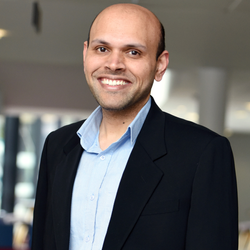
Dr Bruno Lopes is a Senior Lecturer in Microbiology at the University of Teesside, UK. He works on antimicrobial resistance (AMR) linked to Gram-negative pathogens, public engagement, and science communication.
His work focuses on how bacteria evolve, spread and shape human health. He explains: “From a young age, I was fascinated with learning scientific names of different medicinal plants through knowledge gained from my father, which led me to pursue microbiology. As I finished my PhD at the University of Edinburgh in 2012 and began a post-doc at the University of Aberdeen, I had a strong desire to ensure that this knowledge was accessible to policymakers and the general public. Many researchers were not actively doing this as part of their grant funding, which made me think, ‘If we are doing research for the benefit of humanity, then why are we not communicating with the public who are the important stakeholders in this mission?’ This led me to my initiative ‘Bridging Microbiology, Society, and Education Through Engagement’. I have built my career around making complex microbiology concepts understandable, engaging and empowering for diverse audiences, including children who are the future of our society.
Over the past decade, I have developed and delivered a wide range of outreach initiatives from national media commentary to hands‑on microbiology workshops for schools, community groups and those from under‑represented backgrounds. I have also mentored pupils, young scientists, and researchers around the globe through programmes such as the Nuffield Placements and the Black Internship Programme, helping students access real research experiences and achieve national recognition for their work.
The story behind my science is rooted in a belief instilled by my grandfather’s ‘If there is a will, there is a way’ and my grandmother's ‘If you want to do it, Don’t be afraid’. I rely on these principles to guide my approach and share my knowledge in a simple and accessible manner. Many people are aware of antimicrobial resistance, the good and bad microbes, and this is a concept I am familiar with from the days of my PhD. Simple interventions such as maintaining hand hygiene, knowing the correct information and communicating it in an accessible and creative manner motivate me. It is something that is instilled in me through my mother and father. My outreach work now spans traditional media, digital platforms, public events, and collaborations with educators and healthcare organisations. I aim to help people understand the invisible microbial world that affects every aspect of our lives, and to empower them to make informed decisions about health, hygiene and antibiotic use.”
Commenting on receiving the Outreach and Engagement Prize 2027, Dr Lopes said: “The Outreach and Public Engagement Prize reflects the communities, students, collaborators, and the general public I have engaged with for more than a decade. If there is one message I can give, it is to look at the wider impact of our microbiology work, make it accessible, inclusive, and impactful through not just research and teaching, but also by engaging actively with the people around you, starting with your family, the wider communities and those underserved communities that need help today.”
The Outreach and Engagement Prize is awarded to an individual who has made an outstanding contribution to microbiology outreach and/or engagement in order to stimulate interest and understanding in the subject. The recipient is awarded £1,000.
How your Prize winners are chosen
Every Spring we ask our membership to nominate people to be awarded our Prize Lectures. Any member, of any membership category, from anywhere in the world can nominate anyone for a Prize. All of the nominations are then reviewed by our Prize Award Panel, which is led by our General Secretary and comprised of a cross-section of members, aiming to represent the diversity of our membership.