
Cross-sector perspectives on antimicrobial resistance in Mexico
In November 2025, the Microbiology Society held its first international workshop as part of the Knocking Out Antimicrobial Resistance (AMR) project. The one-day workshop took place at the British Embassy in Mexico City and was organised in collaboration with the UK Science and Technology Network and the Department for Business and Trade. The event convened 70 experts from across academia, healthcare, industry and policy to map out the opportunities, challenges and policy actions for addressing AMR in Mexico.

What was the atmosphere like in the room and how did it feel to be chairing this workshop?
Tania: In general, you could feel the excitement in the room, in response to being part of an unprecedented effort in Mexico. Physicians, veterinarians, scientists and policy makers coming from academia, industry and government, were ready to share their particular perspectives on the issue. The discussions in smaller breakout groups felt complex and rich, and trying to capture all the different perspectives in the system maps proved to be challenging.
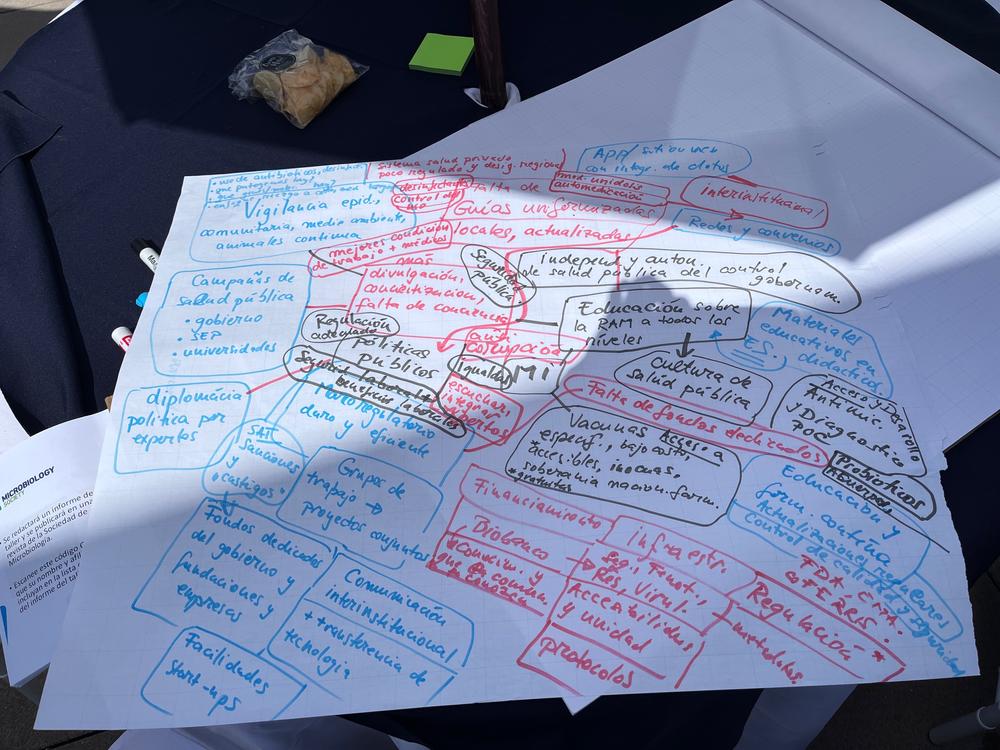
During the plenary discussions, differences in opinions were openly expressed, resulting in an interesting exercise where perspectives from different fields often clashed. As chairs, our job was to keep the discussion both respectful and inclusive, which was tricky at times. In the end, it was a very positive experience that left participants motivated and inspired to keep working against AMR in Mexico.
How did you turn the workshop discussions into a published paper?
Bonnie: The workshop generated 10 systems maps and more than 60 pages of notes recorded by early-career researchers during the breakout group and plenary discussions. As the workshop was conducted in Spanish, the first step was to translate the systems maps and notes into English.
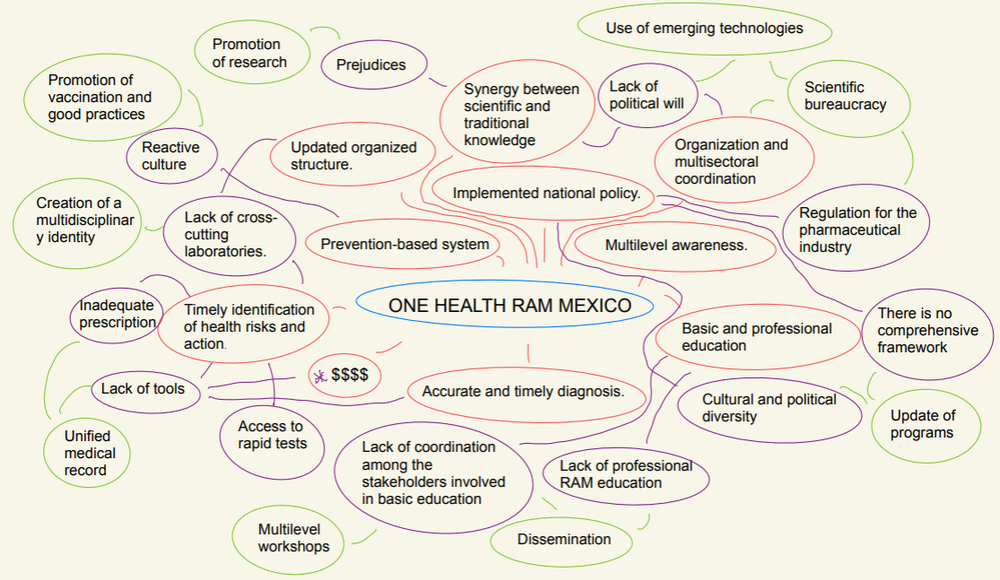
I then took a hands-on approach to synthesising the workshop discussions. I printed the notes, cut out individual comments and grouped them by theme on large sheets of paper. It was a simple but effective way of identifying recurring ideas across discussions and developing the paper's main narrative.
Once the key themes had emerged, I created the summary systems map, reflecting those developed by the workshop participants, to bring the themes back together and illustrate how the different perfect-world scenarios, challenges and policy interventions interact. I drafted an initial version of the map, which the Microbiology Society's Design team transformed into the final figure published in the paper.
Why is it important to bring experts together to talk about AMR?
Santiago: AMR is a very complex public health issue that requires many different scientific and non-scientific areas to be able to properly deal with it. Yet, because each scientific and non-scientific area has its own framework and language, communication across the different areas involved in tackling AMR is often limited. Ideally, we want to go beyond the sector siloes and have a cross-sector approach.
In this regard, initiatives like this workshop are important because they not only promote dialogue across sectors but also push us to place sector-specific knowledge in a broader perspective. Without doubt, this cross-sector dialogue is of paramount importance if we are to develop effective policies in Mexico and worldwide. Of note, considering that AMR significantly affects lower-middle-income countries (LMICs), these initiatives are a must in LMICs.
Micro Scopes
Micro Scopes is an ongoing blog series by the Microbiology Society, written by microbiologists. This series brings you the latest and most exciting scientific findings published in the Society's journals and spotlights the perspectives of microbiologists around the world on their latest research.