
International Women’s Day 2026
What is the biggest challenge you face as a woman in science?
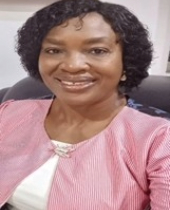
Afolake Olanbiwonninu (Ajayi Crowther University, Nigeria): The biggest challenge is not lack of skill – it is directing or changing the systems which were not intentionally designed with and for women in mind. So, as a woman in science, the greatest challenge faced is work-life integration pressures.
The academic and scientific career route often overlaps with peak family-building years. Unlike many male colleagues, as a woman, I am still disproportionately expected to manage caregiving responsibilities, creating a ‘double shift’, and at the same time carry out research, publish and grow in my scientific career.
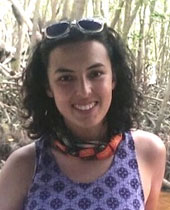
Angelica Mariana Jara Servín (Institute of Evolutionary Biology, Spain): Sometimes the biggest challenge is inside ourselves. Fortunately, I have not really faced gender discrimination, but it is incredibly difficult sometimes to get rid of small actions that come from being surrounded by messages telling us women how to behave. I still struggle with not apologising for asking a question, or for questioning the results or interpretation of my male peers. I have seen this pattern in almost all women starting a career in science (i.e. PhD students, postdocs), but rarely in a male co-worker. Time has come for us to stop tip-towing to express our opinion, asking questions and second-guessing ourselves. It's important for us to analyse these types of attitudes.
Minor changes can also make the difference!

Sara Albagir Abdalla Mohammed (University of Khartoum, Sudan): The biggest challenge that I face is trying to grow in science in a place where conflict repeatedly stops education and blocks access to the lab and mentors. Progress is not defined only by learning or research, but by maintaining access to them in the first place, when they can disappear at any moment. Periods of instability and displacement interrupt training and close off opportunities that are often taken for granted elsewhere. The challenge, therefore, is not only to advance academically, but to find a way to keep going when circumstances beyond my control keep getting in the way.
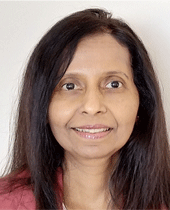
Thiru Vanniasinkam (Charles Sturt University, Australia): One of the biggest challenges as a woman in science is the lack of support mechanisms in place for women to work towards positioning themselves to be competitive for leadership positions when they become available. Support should take into account the challenges of balancing many roles often taken on by women, within and outside the workplace. This includes roles such as being carers of family members etc. The lack of suitable mentoring for emerging female leaders in science is also a key issue.
What has been your greatest achievement in your career so far?
Afolake Olanbiwonninu: My greatest achievement is when I got elected to the position of Deputy Vice Chancellor for Academics, at my institution – the first female Deputy Vice Chancellor. This is purely as a result of my resilience, hard work, integrity and faith.
Angelica Mariana Jara Servín: I believe my greatest achievement so far is balancing my personal and academic lives. I can proudly say that I've managed to migrate to keep my scientific career, I have applied and won competitive scholarships and contributed to science communication, but I have not given up travelling, learning new hobbies, attending weddings and graduations and exercising. Success can be measured in a plethora of ways and it's important to realise what a great achievement is for you, and not let stereotypes dictate what makes you proud.
Sara Albagir Abdalla Mohammed: My greatest achievement so far has been helping create ways for people to stay connected to microbiology and research during periods of disruption in official education and training. Through research capacity-building, antimicrobial resistance initiatives and professional development programmes, I have helped hundreds of students and early-career scientists to continue learning, connecting and growing. In this context, the goal was not only to foster interest in science, but to make sure learning could continue when the usual systems were not working. Creating access and building community during isolation has meant more to me than any personal milestone.
To read more about other amazing women in microbiology, take a look at our special Women’s History Month blog listing.