
Medical Electives Scheme: Specialist Society Medical Elective small grant scheme
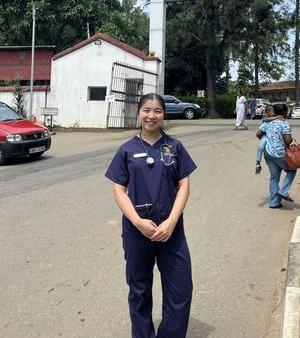
Report by recipient – Daisy Liu
This spring, supported by the RCPath/Microbiology Society Elective Award, I undertook a five-week medical elective in Sri Lanka. I split my time between two government-funded teaching hospitals: Colombo South Teaching Hospital in the capital, affiliated with the University of Sri Jayewardenepura and Teaching Hospital Peradeniya in Kandy, affiliated with the University of Peradeniya. I chose these placements to learn more about infectious and tropical diseases, and to broaden my understanding of how healthcare is delivered in a country with a different social, cultural, and economic background to the UK.
Colombo South Teaching Hospital
Colombo South was a clinically rich introduction to general medicine and infectious disease in a tropical environment. The general medicine wards held 40 beds each for male and female patients, and the teams managed impressive volumes of complex pathology with skill and efficiency.
Clinicians placed an emphasis on thorough history-taking and clinical examination, particularly exposure history and risk factors, before ordering investigations. This approach sharpened my own diagnostic reasoning considerably. The teaching culture was also notably different. With around 20 to 30 medical students per ward, there was a strong emphasis on hands-on learning, and students were expected to clerk patients to present on ward round and perform clinical procedures such as catheterisation and suturing themselves. I found this approach refreshing compared to the more supervised environment of UK medical training. Broad-spectrum antibiotics such as meropenem were used empirically in some cases of undifferentiated febrile illness, reflecting both the clinical complexity and the different prescribing culture. Observing these decisions prompted questions about antimicrobial stewardship, and I learned that clinicians in Sri Lanka have considerably more prescribing autonomy, drawing on European or American guidelines rather than trust-specific ones.
Having never encountered dengue in UK hospitals, I quickly learned that dengue was prevalent in Sri Lanka, with patients admitted for careful fluid monitoring and close haemodynamic observation through the critical phase. Tuberculosis was another important consideration, as patients with respiratory illness of unknown aetiology were in the open ward. This introduced discussions about airborne transmission risk and infection control, where I learned that occupational TB acquisition among healthcare workers is not uncommon, a stark reminder of the infection control challenges in resource-limited environments. I also saw a memorable case of Russell's viper envenomation which presented with localised swelling, neurotoxic features including paralysis and vomiting, and nephrotoxicity, managed with antivenom, adrenaline following an anaphylactic reaction to the antivenom, and careful monitoring of clotting times.
Teaching Hospital Peradeniya
As a tertiary referral centre for tropical medicine, Teaching Hospital Peradeniya offered an even greater depth of learning about infectious diseases. Mosquito nets were in use on all beds in the ward as a response to the hospital's high burden of vector-borne illness. There was a dengue outbreak whilst I was there, with up to 12 patients on a 67-bed ward having the disease simultaneously, including hospital-acquired cases in a medical student and a nurse. I learned that they use two monitoring charts: blue for uncomplicated dengue and red for cases showing signs of plasma leakage, tracking various parameters closely including pulse pressure, PCV, urine output, and platelet trends.
I followed an interesting case of severe leptospirosis involving a young man admitted following white water rafting. He presented with fever, jaundice, renal impairment, and myocarditis. A case-based teaching session covered the biphasic illness course from bacteraemic phase to Weil's disease, relevant investigations, and management with oral doxycycline or IV benzylpenicillin in severe cases. It was particularly striking to learn that doxycycline prophylaxis is provided for free to farmers with occupational exposure to floodwater during the farming season, an example of microbiological knowledge being translated into public health policy.
One highlight of the placement was visiting the parasitology department and museum, where I examined malaria blood films, filarial worms, intestinal protozoa, and cestodes under the microscope, bringing to life pathogens I had only previously heard about in lectures and textbooks. I also attended lectures on tropical CNS infections covering viral causes such as Japanese encephalitis, dengue, and rabies, alongside bacterial causes including TB meningitis and melioidosis, and parasitic causes such as cerebral malaria. These taught me a breadth of knowledge about neuroinfections which are rarely discussed in UK teaching.
Conclusions
This elective provided an invaluable insight into the clinical and microbiological landscape of tropical infectious disease. Seeing conditions such as dengue, leptospirosis, and tuberculosis managed at the bedside deepened my understanding of their pathophysiology, investigation, and management. The experience also highlighted the importance of prevention: mosquito nets, chemoprophylaxis, and vaccination programmes such as BCG at birth and Japanese encephalitis vaccine at one year have a tangible impact on disease burden in ways that are easy to underestimate. Above all, I was struck by how much can be achieved through careful clinical assessment when resources are limited; a thorough exposure history and confident examination remain the most powerful diagnostic tools available. I am extremely grateful to the Royal College of Pathologists and the Microbiology Society for their generous support, which made this learning experience possible.