
Where do we belong? EDI reflections at Annual Conference 2026
The Society’s Annual Conference 2026 in Belfast opened with a session focusing on EDI, titled ‘Celebrating and promoting actions advancing equality (equity), diversity and inclusion’.
Knowing that microbiology influences health, food systems, antimicrobial resistance and environmental sustainability, we also know that ensuring diverse perspectives is fundamental to ensuring microbiology is ethical and effective. Every year, the EDI session is facilitated by Members Panel representatives, and this year we volunteered! We wanted to bring together microbiologists from different backgrounds and career stages to spend time together thinking and talking about EDI and belonging, before getting absorbed in the rest of the conference.
Communities and challenges
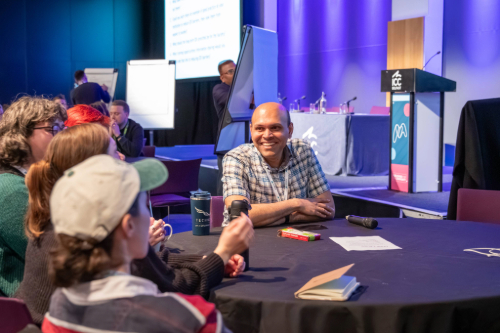
The session started by highlighting the achievements of a community, ND in Micro – they are committed to raising the profile of neurodivergent microbiologists and building a supportive and welcoming global community. Next, participants broke into groups and shared what inclusive environments felt like to them. Interestingly, many found it easier to identify non-inclusive environments. Pressure to fit in, impostor syndrome and opaque practices were identified as barriers to belonging. Others reflected on practical issues, such as balancing caring responsibilities, accessibility needs and differences in opportunities across institutions and countries.
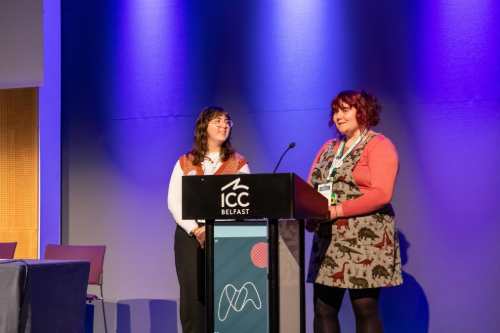
We also saw the 2026 Equality, Diversity and Inclusion Prize be awarded to Professor Bruno Francesco Rodrigues de Oliveira, Professor Edel Pérez-López, Katie Barnes, Dr Landon J. Getz and Dr Nicholas de Mojana di Cologna, from the Pride in Microbiology network, celebrating their commitment to creating a safe-space for Queer and Trans microbiologists to meet, network and collaborate.
Inclusive practices and innovative ideas
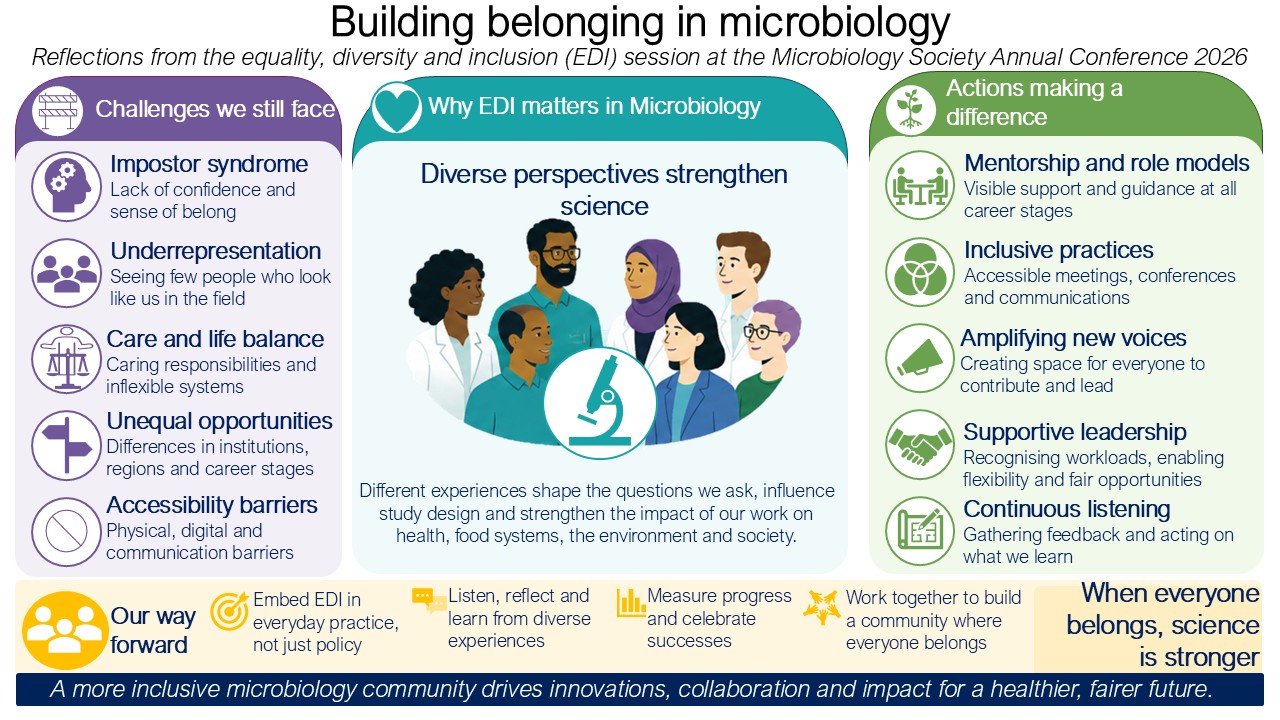
Later, we considered how to promote a sense of belonging. Examples shared ranged from small changes, which could be easily implementable on an individual level (for example, alcohol-free socialising), to systemic shifts (such as having a wider range of visible role models in microbiology). Participants discussed mentorship, accessible conference practices, clearer communication and creating opportunities for new voices to be heard. Some of our discussions are summarised in Figure 1 below .
Figure 1:
Policy and people
Leadership emerged as another important theme: policies alone are not enough, unless they are reflected in everyday practice. Inclusive leadership can take many forms: ensuring all voices are heard in meetings, recognising hidden workloads, supporting flexible working practices and creating transparent processes for recruitment and progression. The discussions also reinforced the importance of maintaining feedback between members and the Society. Meaningful change requires listening, reflection and ongoing evaluation. It also requires recognising that barriers are not always visible and that experiences differ considerably across communities and career stages.
Going forward together
The session left us with a clear message: creating a more inclusive microbiology community is not about adding another layer onto science – it is about creating environments where talented individuals can contribute fully and where different perspectives are valued. As microbiology continues to address global challenges, including emerging infections, antimicrobial resistance, climate change and food security, building a community where everyone feels they belong will remain essential. The future of microbiology will depend on scientific innovation, which, as ever, depends on the people driving it.
To find out more about the Society’s EDI initiatives, visit our equality, diversity and inclusion webpages.