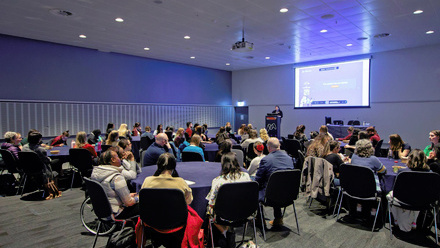
Black History Month: honouring our communities
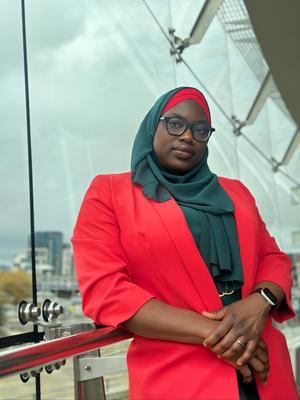
Black History Month, for me, is more than celebrating Black people, but an opportunity to pause and remember the stories, sacrifices and contributions that have shaped where we are today. For the global microbiology community, this is an opportunity to recognise the scientists whose work has helped shape our understanding of infectious diseases, diagnosis and the microbial world.
Long before conversations about diversity, representation and inclusion became part of the scientific landscape, Black scientists were conducting research, making important discoveries, developing diagnostic methods, teaching and mentoring future generations, while navigating significant barriers. Many of their names may not be familiar to us today, but their contributions remain part of the science we practise.
What I find most meaningful about this year's theme, ‘Honouring Our Communities’, is that it reminds us that history is not built by individuals alone. Science is often told through individual discoveries, with a single name attached to a paper, breakthrough or technique. Scientific progress rarely happens in isolation, because behind every scientist is a network of teachers, mentors, colleagues, family members, institutions and communities that provide encouragement, knowledge, opportunity and support.
While writing this piece, I found myself faced with choosing who inspires me, from an incredible number of Black scientists, whose stories and achievements could have been highlighted. Each one of them had contributed something valuable to science and helped pave the way for those who came after them. However, given my own background as a scientist from Nigeria, and my career in microbiology, there were two scientists I had to choose: Ruth Ella Moore (1903–1994) and Jane Hinton (1919–2003).
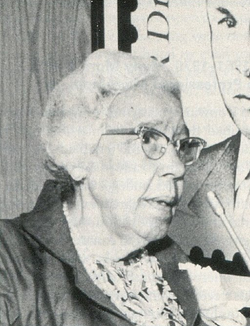
My connection to Ruth Ella Moore is particularly personal as I am from a country where tuberculosis (TB) is a great burden, and which therefore shaped my research focus during my master’s and now in my PhD. My own research focuses on orphan cytochrome P450s in Mycobacterium tuberculosis, the bacterium responsible for TB. Discovering that Ruth Ella Moore’s doctoral research was also centred on Mycobacterium tuberculosis immediately resonated with me. Her career continued at Howard University, USA, where she eventually became Chair of the Department of Bacteriology (which later became the Department of Microbiology). She was also the first Black woman to join the American Society for Microbiology. More than nine decades later, I find myself working on the same organism, asking different questions, but contributing to the continuing effort to understand this remarkable pathogen.
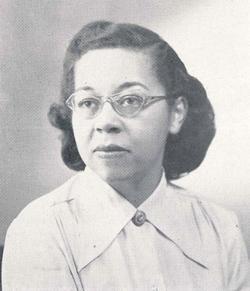
Jane Hinton also stood out to me because her contribution is something that many microbiologists may encounter in their everyday laboratory work. Her work on Mueller-Hinton agar helped establish a medium that remains widely used for antimicrobial susceptibility testing. She later became one of the first two Black women to earn a Doctor of Veterinary Medicine degree in the United States. There is something incredibly powerful about knowing that a technique or tool encountered in the laboratory today has a history connected to a Black woman scientist, whose contribution deserves to be remembered.
Choosing these two scientists, therefore, felt more meaningful than simply selecting names from history. In separate ways, their work connects with the science I practise today. Their stories remind me that the work we do in the laboratory is part of a much longer scientific journey that was built by people whose discoveries, perseverance and contributions have created the foundations on which we continue to build.
I strongly believe that knowing our history matters, because it gives the next generation something to see and aspire to. Their journeys, achievements and perseverance can inspire others to see that there is a place for them in microbiology, and in science more broadly. To honour Black scientific history is not simply to remember a collection of names but a way to recognise the foundations on which today's scientific community has been built.
Today, Black scientists across the world are contributing to microbiology and related disciplines, from infectious disease and antimicrobial resistance to genomics, immunology, environmental microbiology and biotechnology. A powerful example of this is Kizzmekia Corbett-Helaire, whose work in viral immunology and vaccine development contributed to the development of the mRNA-1273 COVID-19 vaccine. Her career also demonstrates the importance of combining scientific work with mentorship, STEM education and engagement with underserved communities.
These contributions remind us that Black history is not confined to the past. Black history is also being made now, and perhaps the most important part of honouring a community is considering what we are doing to strengthen it for those who come next.
Who is being encouraged to study microbiology? Who has access to mentors and opportunities? Whose voices are being heard in scientific spaces? And how can we create environments in which people do not simply enter science, but feel that they belong and can contribute?
This year, we celebrate not only the achievements of Black scientists, but also the communities that helped make those achievements possible, and the communities that continue to shape the future of microbiology today.
To learn more about Black history in microbiology, you can read our series of Black History Month blogs from the past few years.