
East and Southeast Asian Heritage Month: Chien-Yi Chang
September marks East and Southeast Asian Heritage Month, a chance to celebrate the culture, contributions and community of people with East and Southeast Asian heritage. This year's theme, 'evolving threads', is about honouring the ways in which stories, actions and solidarities are woven together across time, place and community.
To mark the month, we spoke to Chien-Yi Chang, a lecturer at Newcastle University, UK, about his journey from studying plant pathology in Taiwan, to researching how bacteria sense and respond to stress; plus, the mentors and colleagues who have shaped his career, and what representation means to him.
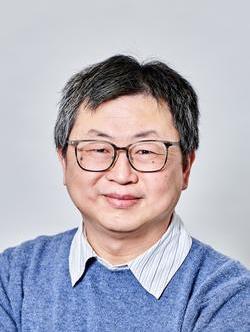
Could you tell us about yourself?
I am Chien-Yi Chang, born and raised in Taiwan. After completing my BSc in Plant Pathology and MSc in Microbiology and Immunology in Taiwan, I moved to the UK to pursue a PhD in Molecular Microbiology at the University of Nottingham, UK. I have remained in the UK ever since, building my academic career. Currently, I am a lecturer in the School of Dental Sciences at Newcastle University, UK, where I teach fundamental science modules to dental students. My research looks at how bacteria sense and respond to their surroundings and to stress, using molecular biology and advanced microscopy.
It’s East and Southeast Asian Heritage Month during September; will you be doing anything to celebrate?
I won’t be doing anything specific to celebrate this year, as September is always an exceptionally busy time in academia, with new incoming students and term preparations. However, I am delighted to take part in this interview to help highlight and advocate for East and Southeast Asian Heritage Month.
The theme of this year’s awareness month is ‘evolving threads’ which is about honouring the ways in which stories, actions and solidarities are continuously woven together across time, place and community. Is this something that speaks to you?
Honestly, the first thing that comes to mind is bubble tea. Taiwanese food culture has always been a tapestry of different influences woven together throughout our history, and bubble tea is probably our best-known modern export. So when I think about ‘evolving threads', that's the thread I keep pulling on.
When I first came to the UK 24 years ago, to study in Nottingham, you'd have struggled to find bubble tea anywhere outside of London. Now there are great boba spots right here in Newcastle, and in pretty much every major UK city. It might sound like a small thing next to my work in science, but it's a real, living connection back to Taiwan, and represents a very real thread connecting me back. It has been wonderful to watch something from my home culture become woven into the daily lives of the wider UK community over the years.
Thinking about community, how important has community been to your career?
Family support has played the most vital role in my journey. An academic career is rarely a smooth path and comes with its fair share of struggle and rejection, but my family has always been by my side to keep me moving forward.
Colleagues have mattered enormously too. I was lucky to work in friendly, open-minded research groups during my PhD and postdocs in Nottingham. We worked hard together, moaned about our research together, drank endless cups of tea together, made ridiculous jokes together. Those were genuinely great times, and they made me feel supported when things were hard. I'm still in touch with some of those friends from my PhD days, even though our paths have taken us in completely different directions since, in the UK and abroad. Colleagues turned into lifelong friends, which is something I really treasure.
My colleagues here in Newcastle are just as great. They're part of my day-to-day work in teaching and research, but they're also a sounding board, people I can go to for advice or support when things get difficult. Being surrounded by positive, supportive people matters so much in a career that can otherwise be highly competitive and relentlessly busy.
When and why did you first become interested in microbiology?
As I mentioned, my first degree was in plant pathology. At the time, I honestly had no idea what the discipline even was. All I knew was that I liked biology, and the university entrance system in Taiwan placed me on that programme. I assumed it would be all about plants, but I soon realised most of it was actually about microbiology in the broadest sense: viruses, bacteria, fungi, nematodes, how they grow, respond, survive and cause infection.
I still remember one practical class in particular, looking down an old single-eyepiece microscope for the first time and watching an enormous number of bacteria (Erwinia, as I recall) pouring out of a piece of necrotic plant tissue. That was fascinating, which has stuck with me ever since. That moment pushed me to specialise further in microbiology for my Master’s degree, where I started developing an interest in the molecular biology side of things. That's ultimately what led me to my PhD in Molecular Microbiology, studying quorum sensing in Yersinia pseudotuberculosis.
If you hadn’t gone into science, what career path would you have chosen?
I don't know for sure. I've always loved biology and science, but I also have a deep passion for music. I've been singing in choirs since high school. So, if I hadn't pursued science, I would have loved to train further in music. Rather than becoming a performer, I'd want to study how beautiful music is crafted and how it profoundly influences our emotions.
As someone working in microbiology in the UK, from an East Asian background, have you faced any challenges because of your background?
I try not to put my career setbacks, whether that's slower progression, papers not getting through review or grants being rejected, down to my background. I would rather focus on what I can improve and see these experiences as part of learning and becoming ready for the next step.
That said, I do think there can sometimes be a subtler challenge, and this is much harder to define. It is not necessarily about whether you are ready, but about how ready others perceive you to be, such as, whether you're given the same degree of confidence when opportunities arise to take on bigger roles or responsibilities, or whether giving you that opportunity is quietly seen as more of a risk than giving it to someone else.
I've often felt like the bar for me is set a little higher than it needs to be, so I put in extra effort to make my case unmistakably clear. I honestly don't know how much of that is a real, external expectation, and how much is just the standard I hold myself to. It's probably some of both, and I'm not sure it's possible to fully untangle the two.
Do you have any role models, if so, who?
Yes, I have two, and interestingly, both have strong links to the Microbiology Society. Paul Williams, the Society's 2026 Prize Medal winner, was my PhD supervisor and later the principal investigator (PI) for my second postdoc. Liz Sockett, winner of the 2006 Peter Wildy Prize, was the PI for my first postdoc. They're both brilliant microbiologists, and beyond their science, they taught me what genuine scientific rigour looks like in practice, the kind of discipline I still try to bring to my own work today. I don't think I need to say much about their contributions to the field. Their achievements speak for themselves.
On top of that, I was incredibly lucky to work in their groups. As I mentioned earlier, they both created supportive, generous, research environments where people could genuinely thrive. And that support didn't stop the day I left their labs; it's followed me through my whole, sometimes bumpy, career journey. Even now, Paul is still happy to help me shape my research ideas, and I still get warm, lovely words and home-made jam from Liz.
That's exactly what I want for my own group, to build the kind of environment where people feel supported, not just by me as PI, but by each other. And ideally, that kind of support doesn't stop when someone moves on. It gets passed down to the next generation of microbiologists too.
You are currently an editor for the Society’s journal, Microbiology Outlooks, what made you decide to get involved and become an editor?
I've been asked to review manuscripts for all sorts of publishers over the years, some fully commercial, profit-driven publishers, and a few run by learned societies. Peer review and editorial work are essentially voluntary. Academics do it because it's how good science gets vetted and shared, not because there's anything in it for us financially.
What I like about a Society journal like Microbiology Outlooks is that it isn't profit-driven; any surplus goes back into supporting the microbiology community through grants, conferences, early-career support and outreach. For me, taking on an editorial role there felt less like ‘another line on the CV’ and more like genuinely paying back into the community that's supported my whole career. As a microbiologist working in the UK, I felt I should be contributing to the Society, not just benefiting from it. When the opportunity came up, I didn't think twice.
Do you think representation of people from a variety of backgrounds within the Society’s editorial boards is important?
I think about this a bit like a healthy microbiome is a diverse microbiome. The Society's journals exist to publish excellent research and spark scientific discussion that reaches beyond the scientific community, out into the wider world. If we only bring one perspective to that process, we narrow what we're able to see, and we risk missing excellent work simply because it doesn't look like what we're used to. A more varied editorial board widens that lens, and that means better science gets recognised, not just more familiar science.
Our thanks to Chien-Yi for generously sharing his story with us. If you'd like to get involved or have a story of your own to share, please email [email protected].