
International Day of the World's Indigenous Peoples: Skylar Ann Gay
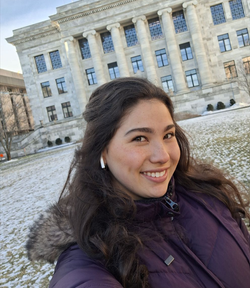
As a member of the microbiology and Indigenous communities, I see great overlap in the values of community, collaboration and perseverance. I am a PhD student at Harvard Medical School studying gut microbiome lactic acid fixation, focusing on endurance and high-performance athletes from a systems biology viewpoint. I am a descendant of the Monacan Indian Nation and the Eastern Band of Cherokee Indians (EBCI) in the United States. My Indigenous heritage has always been a great source of joy and as I have reconnected with the culture through everyday practices, my pride has only grown. Today, we celebrate the cultures and histories of an estimated 476 million Indigenous peoples across the world. This day was established by the United Nations in 1994 to recognise the unique challenges and protections needed by modern Indigenous peoples to secure their sovereignty and traditions. Today’s Indigenous peoples represent a large diversity of cultures and practices, which have become a beautiful blend of tradition and modern identities, bridging tribes to unify our distinct characteristics.
Indigenous practices rooted in microbiology
Early Indigenous medicinal practices focused on natural remedies for infections; however, they have been widely ignored in modern medicine. The literature notes thousands of unique plant species used in native medicines, ranging from wound treatments to gastrointestinal aids. Interdisciplinary partnerships allow anthropologists and scientists to investigate the nature and uses of many of these plant-based approaches. Remedies used for wound infections include dandelion and bergamot- plants still common within much of the world. As rates of antibiotic resistance rise in bacterial infections, some studies have turned to investigate the merits of these natural remedies. One notable study examines 85 Indigenous remedy plant extracts for antimicrobial and biofilm prevention, identifying extracts providing MRSA growth inhibition, biofilm prevention and eradication (Reiger, 2024). Indigenous knowledge extends beyond the clinic to environmental microbiology.
Traditional ecological knowledge (TEK) is a core body of knowledge developed by Indigenous peoples through their interaction with the environment. This has led to an emerging field of Indigenous microbiology, uniting contemporary and ancestral perspectives on microbes and their role in sustainability and culture. Interest in Indigenous microbiology grows as we continue to explore the microbiome and its role in human health and environmental systems. This understanding centre’s on microbial diversity’s contribution to ecosystem restoration through; pollutant degradation, composting, wastewater treatment and influence on greenhouse gas cycling (Silva, 2026).
Celebrating Indigenous cultures
Land acknowledgments allow us to honour the tribe whose land we currently occupy. If you choose to incorporate land acknowledgments into your practices, consider the following factors: intention, education and appropriate language. Approaching this topic in a public, lab or industry space is not always easy. The best place to start is providing a safe space to facilitate discussion of heritage with inspiration and support in learning about Indigenous communities. When opening a land acknowledgment, take a moment to learn about the tribe you are acknowledging, their history, traditions and modern cultural practices. Utilisation of language such as “stolen land,” acknowledges the history of Indigenous people’s land without justifying or minimising the actions taken in the past. Consult online resources published by Indigenous organisations for examples of successful land acknowledgements.
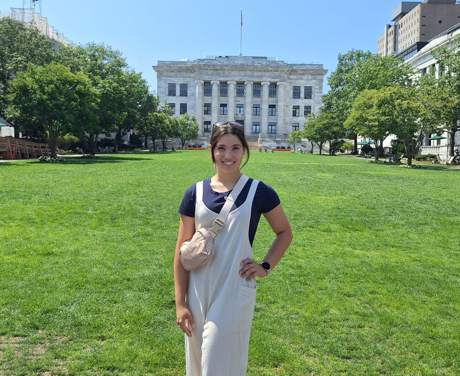
Consider contacting local communities and organisations to learn more about their ongoing work, potential partnerships and volunteer opportunities. Many organisations offer frequent seminars and webinars to learn more about specific topics in Indigenous life and culture. Additionally, craft fairs and powwows feature Indigenous creators who are eager to demonstrate their craft and showcase their work. These events are welcoming and open to all. Incorporating these opportunities for celebration and education in your life is one way to continue demonstrating support for tribal heritage.
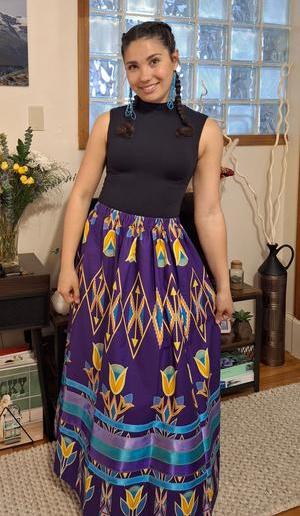
Today, I am choosing to celebrate and represent my culture wearing a ribbon skirt, hand beaded jewellery and braids. A ribbon skirt is a colourful and hand-made reclamation of indigenous identity. Ribbon skirts tell a story or invoke meaning through colour, while remaining a decorative and sacred part of the community. These skirts consist of a linen or cotton base and are adorned with bright satin ribbons sewn along the bottom of the skirt. I began designing and beading my own jewellery during undergrad and it has become a vital part of my personal identity. Constructing each of these pieces takes 5-10 hours each depending on the complexity of the design and can be worn day-to-day and on special occasions. Each bead is made of coloured glass measures approximately 2-3 mm and weigh 0.09 g. It is vital to source regalia from indigenous designers rather than current trends in mass-production. Protecting these artists in their craft is key to maintaining our culture. Everyone is welcome to support these creators and their cultural practices.
When conducted with respect, reverence and openness, honouring Indigenous cultures builds a greater community in which we all benefit. The sense of belonging and community is an incredible hallmark of Indigenous peoples and their continued presence in the world. On this World Day of Indigenous Peoples, I invite you to learn more and join me in celebrating the pride of my people.
Rieger, Colin D, et al. “The Antimicrobial Potential of Traditional Remedies of Indigenous Peoples from Canada Against MRSA Planktonic and Biofilm Bacteria in Wound Infection Mimetic Conditions.” Microbiology Spectrum, Dec. 2024, p. e0234124, https://pubmed.ncbi.nlm.nih.gov/39530700/, 10.1128/spectrum.02341-24. Accessed 15 July 2026.
Silva, Francyeli Araújo, et al. “Indigenous Microbiology: Why Indigenous Knowledge Matters in Microbial Science.” FEMS Microbes, vol. 7, 2026, 10.1093/femsmc/xtag024. Accessed 15 July 2026.
Find out more about the Society’s equality, diversity and inclusion initiatives, including similar awareness day blogs from members.