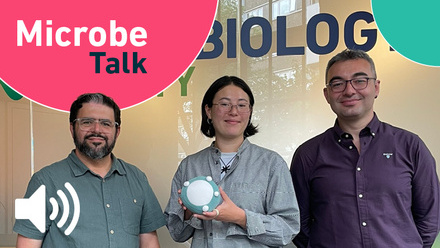
In this episode of Microbe Talk, we meet some members of staff at the Microbiology Society to reflect on 2025 and look at ways to get involved in 2026.
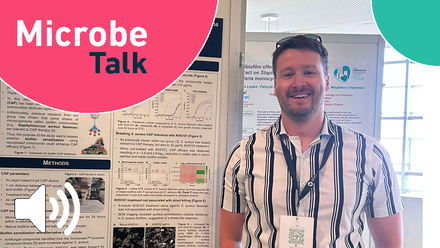
📣 Episode 186 is out now! This month, Lilly welcomes Dr Jason Brown from the University of Glasgow to discuss his latest research findings using cold atmospheric plasma (CAP), a form of ionised gas, against biofilms in wound infections. Listen in to hear their discussion of what CAP therapy is, how it works, and why this treatment could be a useful alternative to antibiotics.
📣 Episode 185 is out now! This month, Lilly welcomes Dr Hannah Trivett from the University of Birmingham to the podcast, to discuss her latest publication bringing patient and public involvement (PPI) and microbial genomics research together for the first time ever. Listen in to hear their discussion of what the public think about effective science communication and how researchers can benefit from incorporating this into their work.
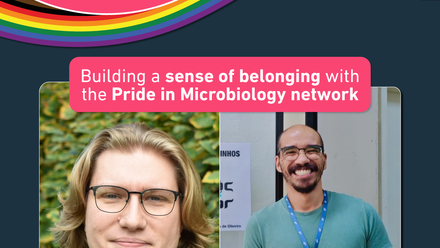
📣 Episode 184 is out now! In this month's Microbe Talk, Lilly welcomes Dr Bruno Francesco Rodrigues de Oliveira and Dr Landon Getz, two of the founders of the Pride in Microbiology network, join Lilly to discuss why their work to harness community and professional development opportunities for LGBTQ+ scientists around the world is as important as ever.
In this month's Microbe Talk, Charlotte Holtum (Head of Engagement & Storytelling) welcomes guests Dr Alicia Demirjian (UK Health Security Agency and Guy’s and St. Thomas’ NHS Foundation Trust) and Dr Yoann Personne (bioMérieux), to explore an underdiscussed corner of the antimicrobial resistance conversation: its management with sepsis. They discuss what underpins the real-world relationship of AMR and sepsis, improving antibiotic stewardship in hospitals, and addressing these issues sooner rather than later.
In this month's Microbe Talk, Lilly chats with microbiologist Prof Wilhelmina Huston about what science knows so far about the relationship between the vaginal microbiome - the composition of microbes that live on and within the vagina - and sexual health, including her recent research investigating how the microbial composition of the vagina can impact susceptibility to painful conditions, like pelvic inflammatory disease (PID). We also cover current treatments and where the future of treatment of STIs and other sexual health disorders is headed.