
When science goes to the communities: youth on the frontlines of the antibiotic crisis

Every year, antimicrobial resistance (AMR) kills over a million people globally. It makes infections harder to treat, surgeries riskier and routine illnesses life-threatening.
The annual WAAW helps raise awareness about this threat but, too often, the conversation stays in conference rooms, schools, press conferences and scientific journals, far from the farms, displacement camps and informal settlements where the problem hits hardest.
Last year, the One Health and Development Initiative (OHDI) decided to do something different.
The mission: take AMR everywhere
Under the global WAAW 2025 theme – ‘Act Now, Protect Our Present; Secure Our Future’ – OHDI launched the latest phase of the award-winning Youth for AMR Risk Communication and Action (YARC), a global capacity-building initiative that strengthens AMR education, risk communication and youth-led action across Africa and other LMICs. This phase was implemented from 1 October to 5 December 2025.
The goal? Reach the people that public health campaigns consistently miss: residents of Internally Displaced Persons (IDP) camps, rural farmers, Disabled people, NEET youth (those not in education, employment or training) and communities in remote settlements – across the six geopolitical zones of Nigeria.
Led by Society Champion and Program Coordinator for AMR Mitigation and Antimicrobial Stewardship at OHDI, Damilola Adesuyi, the initiative operated on a simple but powerful belief:
The blueprint: three phases, one vision
Phase 1 (1 October–15 November): training champions who train champions (the multiplier effect)
Nine youth advocates from OHDI's existing youth network underwent a four-day virtual bootcamp covering AMR, WASH (water, sanitation and hygiene) practices, field data collection and the art of communicating with marginalised communities. Each champion then trained four more people, creating five-person teams, a multiplier effect, extending beyond the initial cohort of nine youths.
Phase 2 (26 October–15 November): mapping before megaphones
Before a single awareness session was held, champions went into communities to listen. Surveys and focus group discussions helped map out what people actually knew, what risky behaviors were common, and what communication barriers existed. The outreach was not built on assumptions; it was built on evidence.
Phase 3 (25 November–5 December): from training rooms to farms and markets
Armed with culturally adapted materials, posters, banners and storytelling scripts in local languages, champions fanned out across Nigeria: farm visits, market engagements, peer-to-peer discussions, radio broadcasts and on-site workshops. The message was the same everywhere: use antibiotics wisely, practice good hygiene and know that your choices matter for everyone around you.
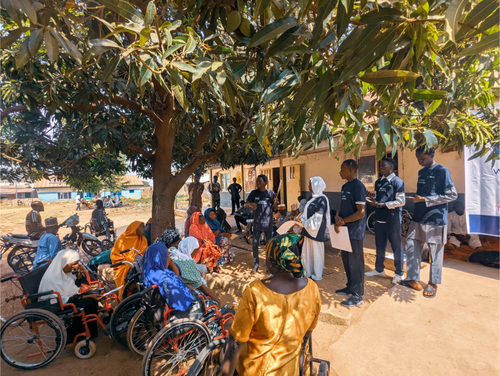
What happened when you actually showed up
"It is rare for awareness initiatives to specifically include NEET youths. Our communities were finally recognised and valued." (a NEET Youth Guardian)
|
~2,000 People sensitised |
45+ Youth champions deployed |
70–90% Improvement in AMR knowledge |
Post-outreach surveys recorded a 70–90% improvement in understanding of AMR risks and responsible antibiotic use across participating communities. Among the champions themselves, training surveys showed over 80% improvement in AMR and WASH knowledge.
But the numbers tell only part of the story. The abattoir management in Zaria praised the campaign and offered to open their doors to future outreach, showing that when engagement is conducted with genuine cultural respect, people do not just receive information, they welcome it.
Communities also moved from passive reception to active intention: expressing willingness to adopt improved hygiene and more responsible antibiotic use in their daily lives.
What the field taught the team
- Resourcefulness is non-negotiable: Limited funding and connectivity gaps in remote areas demand creative problem-solving and budgets that account for complex logistics.
- Culture is the medium: Storytelling in local languages, visual aids and context-specific framing are not extras; they are the whole point, especially in low-literacy settings.
- Flexibility opens doors: Rigid timetables shrink your reach. Flexible scheduling allowed teams to connect with more people in more meaningful ways.
- Track impact from the inside: Monitoring and evaluation frameworks must be built in, not bolted on. Consistent reporting templates and feedback loops are what prove whether any of this actually works.
The road ahead
AMR is often framed as a scientific problem, requiring a scientific solution; new drugs, new diagnostics, better hospital protocols. And yes, all of that matters. But AMR is equally a communication problem, a trust problem and an equity problem.
When the people most likely to overuse or misuse antibiotics (often because they lack access to proper healthcare and can only afford whatever is available at the market) are not part of the conversation, no amount of laboratory innovation will be enough. The present we are trying to protect belongs to IDP camp residents, rural farmers, NEET youth and people with disabilities, just as much as it belongs to anyone else.
YARC 2025 proved that these populations can and want to be reached; and that when you meet them with respect, local language and genuine curiosity about their reality, they will show up, enthusiastically.
We remain committed to empowering young people globally to drive AMR education, advocacy and action in their communities. No one and no community should be left in the dark.
Find out more about the Champions Scheme and the activities our Champions undertake on our Society Champions page.