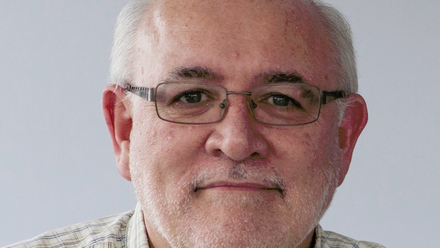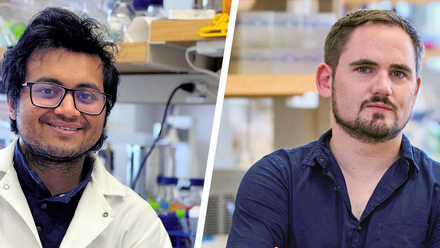
Meet the 2026 Marjory Stephenson Prize Winner, Professor Mark Buttner
Congratulations for winning the Marjory Stephenson prize. How did it feel when you found out?
I was thrilled. And, of course, very grateful to The Society. As a PhD student, I gave my first public seminar at a Society meeting in Sheffield in 1984, so my links with The Society go all the way back to the beginning of my career! I was also very grateful to the two former post-docs who nominated me, Professor Paul Hoskisson from Strathclyde University and Professor Matt Hutchings from the John Innes Centre.
Can you describe the most surprising scientific discovery that emerged from using this model system, and how it has influenced the field of bacterial development research?
That would probably be the work I am going to talk about in the Prize Lecture – the discovery that cyclic di-GMP (c-di-GMP) controls progression through the Streptomyces life cycle. Previously, c-di-GMP had mostly been studied in Gram-negative bacteria, where c-di-GMP-dependent signalling pathways typically control the transition from a planktonic, motile lifestyle to a surface-associated, sessile lifestyle (the so-called “stick or swim” lifestyle choice). So when Natalia Tschowri, a post-doc in the lab, engineered high or low levels of c-di-GMP in Streptomyces and found that high levels of c-di-GMP locked Streptomyces in vegetative growth, whereas low levels of c-di-GMP caused them to race through the life cycle and form tiny colonies that consisted almost entirely of spores, it was a revelation. Although it was a simple experiment, what Natalia did profoundly changed our view of what we were working on. Consequently, our focus shifted to trying to identify the direct molecular targets of c-di-GMP, and once we had done that, trying to understand how c-di-GMP controlled the activity of those target proteins at the biochemical and structural level.
How do you see the connection between fundamental microbiology studies, like developmental regulation in Streptomyces, and their broader impacts on antibiotic discovery or translational applications?
I believe in the importance of fundamental research. I think everyone can see that key translational applications often emerge from seemingly academic studies in unexpected ways. Back in the late 80s, no one could have predicted the future applied significance of studying a then-obscure phage-resistance locus called CRISPR. In Streptomyces, the life cycle and antibiotic production are really two sides of the same coin. Antibiotic production and the life cycle are tightly coordinated, both temporally and genetically. Our studies on developmental regulation in Streptomyces illustrate that point. We were interested in the control of sporulation. We showed that c-di-GMP controls progression through the life cycle, and that the activity of the master repressor at the top of the developmental cascade, a protein called BldD, is directly controlled by binding c-di-GMP. All of that was driven by our interest in development, but since those discoveries, multiple labs have gone on to show that c-di-GMP levels affect antibiotic yield, not just in Streptomyces but also in other filamentous Actinobacteria, and that the effect of c-di-GMP on antibiotic yield is often mediated directly by BldD. For example, the BldD-(c-di-GMP) complex has been shown to directly control the expression of the biosynthetic gene clusters for several clinically important antibiotics. Including erythromycin in Saccharopolyspora erythraea, daptomycin in Streptomyces roseosporus, and avermectin in Streptomyces avermitilis. Avermectin is the antibiotic that Satoshi Ōmura won the 2015 Nobel Prize for discovering. It’s very important in veterinary medicine and it’s used to treat river blindness and lymphatic filariasis in humans. So even though the genesis of the c-di-GMP work was the regulation of sporulation, it’s now clear that the developmental processes controlled by BldD-(c-di-GMP) in Actinobacteria extend to their medically and commercially important specialized metabolism.
What principles of mentorship or lab culture have you found most effective in fostering scientific independence and creativity among young researchers?
Enthusiasm and praise are the best motivation for the people you work with. If you love what you’re doing, that excitement conveys itself to everyone. Plus, of course, giving them exciting, tractable projects to get their teeth into. There is nothing more motivating for an early-career-stage scientist than making a cool discovery and publishing a first-author paper in a good journal. Encouraging them to attend and speak at conferences is also highly motivating.
Lack of confidence is common, so, where appropriate, making a point of telling postdocs that they are excellent scientists and that they have everything they need to go on and run their own labs is very important. Encouraging them to apply for fellowships and faculty positions at the right time, spending time reading and commenting on their applications, and giving them mock interviews, is critical. You owe it to your postdocs to give them the biggest push you can when they leave. So, when a postdoc is going to start their own lab, it’s important to be generous and let them take what they have been doing with them so they can hit the ground running. Subsequently, if former postdocs asked me to read their first grants and papers from their own labs, I always tried to do that and do it enthusiastically.
Switching focus a bit, I frequently involved people in my lab in grant writing and in refereeing papers, which is a good preparation for their future. And where appropriate, I let the first author on papers act as corresponding author, because you can see that letting them be the one to receive the decision letter, the proofs etc, is highly motivating.
What are the biggest challenges still facing the field of Streptomyces research, and where do you see the most exciting opportunities for the next generation of microbiologists?
The funding of Streptomyces research is always going to be driven, first and foremost, by antibiotics. The tidal wave of actinomycete genome sequences has revealed the full potential of these bacteria to make an astonishing array of natural products. A major challenge is to bring that potential to fruition by delivering the next generation of antibiotics and other types of compounds for use in human medicine like anticancer agents.
As far as opportunities for the next generation are concerned, I think understanding the significance of the production of natural products in an ecological context is a very exciting challenge for the future. As an example, geosmin is the volatile compound made by Streptomyces that gives soil its characteristic earthy smell. All Streptomyces species make geosmin, but nobody knew why. My lab showed that expression of the geosmin biosynthetic genes was under the direct control of the sporulation regulatory cascade, so that geosmin production is restricted to sporulating colonies. Our collaborators in Sweden, Klas Flärdh and Paul Becher, went on to make the amazing discovery that geosmin serves to attract insect-like creatures – soil arthropods called springtails – that feed on Streptomyces and distribute their spores, completing the life cycle. You can think of it as analogous to birds eating fruit and distributing the seeds. I think the ecological context of natural product biology is a very underexplored and exciting area for the future.
Looking back on your career, were there specific turning points or collaborations that you feel were foundational to reaching this milestone?
As far as collaborations are concerned, if you come to my talk, you will see that our collaboration over the last 15 years with the structural biologists Maria Schumacher and Dick Brennan at Duke University has been central to achieving our goals. Their amazing structures gave us key mechanistic insights into how c-di-GMP controls the target proteins we identified, which we could never have obtained in other ways. In the last 3 years before I retired, we also established a highly productive collaboration with two other amazing structural biologists, Liz Campbell and Mira Lilic at Rockefeller University in New York. Maria, Dick, Liz and Mira have all been a joy to work with – fantastic scientists first and foremost, but also generous and great fun. These collaborations combined important biology with mechanistic understanding at the molecular level, which is exactly the kind of science I love the most. Beyond structural biology, I have been collaborating with Klas Flärdh, a Streptomyces cell biologist in Lund, Sweden, on multiple topics for more than 25 years, and his collaboration and friendship have formed a rich part of my career. Nearer to home, Govind Chandra, our departmental bioinformatician, and Kim Findlay, head of John Innes Bioimaging and a superb electron microscopist, have done fantastic work and have been ever-present as authors on our publications – we simply could not have succeeded without their talents.
In terms of discoveries as turning points, at the very beginning of my independent career, the discovery of the ECF subfamily of sigma factors with Mike Lonetto was a huge boost. But throughout my career, I have been lucky enough to have had very talented lab members who have made “turning point” discoveries. For example, Mark Paget’s discovery of the novel regulatory switch that controls the primary oxidative stress response in Streptomyces. Marie Elliot’s biochemical and genetic characterisation of the chaplins, the family of cell-wall anchored hydrophobic proteins that enable the specialised reproductive aerial hyphae to escape surface tension and grow into the air. Hee-Jeon Hong and Matt Hutchings’ characterisation of the mechanisms underlying inducible vancomycin resistance in Streptomyces coelicolor. Matt Bush showing how two developmental regulators called WhiA and WhiB co-regulate their target genes to control the initiation of sporulation septation. Susan Schlimpert’s use of time-lapse imaging to demonstrate a novel and critical role for two dynamin membrane-remodelling proteins in bacterial cell division. Natalia Tschowri identifying the developmental master regulator BldD as a direct target of c-di-GMP, followed by Kelley Gallagher and Maria Schumacher discovering that the key sporulation sigma WhiG was also a direct target of c-di-GMP. In that way, Natalia, Kelley and Maria showed how c-di-GMP controls the two major developmental transitions of the Streptomyces life cycle - it regulates BldD to control the formation of the reproductive aerial hyphae, and it regulates WhiG to control the differentiation of those reproductive hyphae into spores.
At another level, a critical turning point was the decision to stop working on the classical model species Streptomyces coelicolor, which only differentiates on plates. We went on to establish Streptomyces venezuelae as a new model species, because it sporulates almost synchronously in liquid culture. In that regard, I am massively indebted to Maureen Bibb, who almost single-handedly created all the tools and resources we needed to work with this new species. Having done that, we could take developmental time-courses from liquid instead of scraping developmentally heterogenous material from agar plates. Maureen went on to perform time-resolved, genome-wide transcriptional profiling of the wild type and of all our developmental mutants. Creating a gene-expression database that remains a goldmine to this day. As a direct consequence of Maureen’s efforts, numerous Streptomyces labs around the world have adopted S. venezuelae as their experimental system.
Although, my major reason for adopting Streptomyces venezuelae was so that we could apply global omics techniques like ChIP-seq and RNA-seq to Streptomyces development, it has had many wider benefits. Working on a species that sporulates in liquid also had the obvious potential to allow the full application of modern cell biological methods to Streptomyces development. I am not a cell biologist, but at just that moment, Susan Schlimpert came to the lab as a post-doc and single-handedly made that dream a reality, rapidly generating breathtaking movies of the entire life cycle using a microfluidics device under the epifluorescence microscope. In that way, we were suddenly able to watch all our favourite proteins move around in time and space during sporulation. It still makes my heart leap when I think of the moment that she showed me her first movies. Susan was one of those amazing postdocs who arrived in the lab fully formed - all you had to do was stand on the sideline and wave the pom-poms!
How do you think the identity of microbiology is changing, and what core skills or mindsets do you think future microbiologists will need to thrive?
It’s vital to be open to the potential of new technologies, but that aside, the core mindset I would recommend is to follow what you love. I always worry when I hear someone making some sort of political triangulation about their future research, rather than finding the biology that excites you the most and pursuing it. If you love what you’re doing, that enthusiasm conveys itself to everyone and, as I said earlier, enthusiasm and praise, along with good projects, are the best motivation for the people working with you.