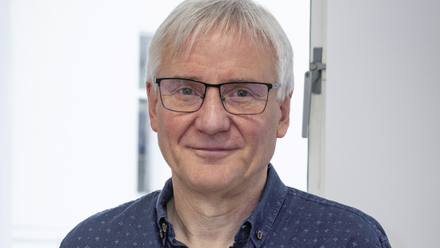
Meet the 2026 Prize Medal Winner, Professor Paul Williams
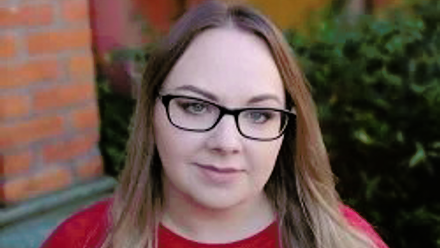
About Thomas:
I am a Research Fellow in Pharmaceutical Microbiology at Queen’s University Belfast, where my work focuses on why biofilm-associated bacterial infections can be so difficult to treat and how new approaches might help overcome antimicrobial failure. That made speaking with Professor Paul Williams, winner of the Microbiology Society Prize Medal, a particularly good fit.
His work has helped shape how many of us think about quorum sensing, virulence and bacterial behavior in infection, all of which remain highly relevant to understanding persistence and treatment response.
What stood out most was the mix of depth and humility he brought to the conversation. He spoke with real enthusiasm about discovery, but also with the honesty of someone who knows that science rarely moves in a straight line.
The conversation:
What got you into microbiology in the first place?
I actually avoided biology at school. I much preferred chemistry and history, but I did not really want to do a chemistry degree because it felt a bit too specific, and I was not sure what sort of job I would get afterwards. Pharmacy seemed to offer a broader perspective, and I liked the idea of drug discovery, so that felt like a good route in.
Once I started the course, I found that I really liked pharmaceutical microbiology, especially everything to do with antibiotic discovery and development so, after my degree, I did my hospital pre-registration training, and then went on to do a PhD in microbiology at Birmingham in the pharmacy department with Mike Brown, working on Klebsiella pneumoniae virulence. Looking back, that was really where it all started.
What did receiving the Microbiology Society Prize Medal mean to you?
It was very unexpected. I was absolutely thrilled to receive it as it’s a special prize. The Microbiology Society has been a very important part of my scientific development, so I was very grateful to the people who nominated me.
I would also say that scientific progress is very much a team effort. All the work we have published has depended on super-talented PhD students, postdocs, colleagues, and collaborators around the world. We have been at it for something like 40 years, so there are a lot of people wrapped up in that recognition.
Your research has shaped our understanding of quorum sensing and bacterial behavior. What do you think is the most common misconception about quorum sensing?
One of the biggest misconceptions is built into the term itself. “Quorum sensing” sounds as though bacteria are somehow counting cell numbers and only responding once they reach a fixed threshold. That is not really the right way to think about it.
What matters is the concentration of diffusible signal molecules in a particular environment. That depends not only on how many bacteria are there, but on diffusion, confinement, fluid flow and the local surroundings. So, it’s much more about signal concentration than about a literal quorum.
People often describe quorum sensing as “bacterial communication.” How do you explain it to non-specialists?
I think that is still a useful shorthand, as long as you do not take it too literally. Bacteria may be single-celled organisms, but they do not always behave as isolated individuals. They produce small chemical signal molecules, and when those molecules build up to a sufficient concentration, other bacteria can detect them and switch genes on or off in response.
That means populations can coordinate behaviours that would be ineffective if switched on too early or by too few cells. The classic example is bioluminescent marine bacteria, where the population only lights up once enough signal has accumulated. In pathogens, similar principles can help coordinate behaviours linked to virulence and persistence.
When you think about quorum sensing in real infections, rather than under ideal laboratory conditions, what matters most?
Real infections are much more complex than the systems we usually work with in the lab. In vivo, bacteria are dealing with host immunity, nutrient limitation, spatial structure, competing microbes and changing local conditions. All of those factors can affect whether signaling happens, how strongly it happens, and which parts of the population are actually responding.
A good example is cystic fibrosis infection. We worked with hospital colleagues to look for quorum-sensing signal molecules in body fluids from different patient cohorts. In stable patients, you could detect low levels of signal molecules, but during acute exacerbations you could pick up much higher levels, for example in blood plasma. That opened the possibility of using these molecules diagnostically, and that work eventually fed into patenting and later diagnostic development.
Was there a result that surprised you and made you rethink things?
Our most exciting discovery was unexpected and initially a big disappointment. You have to go back to the late 1980s, when we were working on carbapenem antibiotics made by strains of Erwinia and Serratia. We had mutants that could no longer produce the antibiotic, but when certain mutants were grown near one another, antibiotic production was restored. That suggested some kind of diffusible factor was involved.
The surprise was that the factor was not a carbapenem biosynthetic intermediate at all. It turned out to be the same type of molecule used by the marine bacterium Vibrio fischeri to control bioluminescence. At first, we thought, well, that is the end of the project — we are not going to get any novel carbapenems out of this. However, Gordon Stewart at Nottingham had a bioluminescent biosensor in E. coli that responded to the Vibrio fischeri signal molecule, and that allowed us to screen lots of other bacteria. We started finding many Gram-negative organisms that produced related molecules, and that was when the whole thing opened. We even sent the paper to Nature and got rejected because they said it was not of broad biological significance, which looks rather funny in hindsight.
What still gives you the biggest sense of joy or curiosity in microbiology?
A lot of it is still about mechanism. I have always enjoyed trying to work out how things function at a deep level, which genes are involved, how they are regulated, and what those systems are actually doing in bacterial behavior. That part has never really gone away.
At the same time, it is always exciting when fundamental microbiology leads somewhere more applied. More recently, for example, work on surface micro-topographies and biofilm inhibition has shown that you can start asking practical questions about how to discourage bacterial attachment on medical devices, while still learning something important about the biology.
For early-career microbiologists, what is one piece of advice you would give?
You learn more from your failures than your successes. That applies to experiments, but it also applies to papers, grants and job applications. If something fails, there is usually still something useful in it or it’s something you can improve, rethink or do differently next time.
That is something I have always tried to pass on to early-career researchers. Failure is never enjoyable, but it is often where the most useful lessons are. A lot of scientific progress comes from following up things that did not behave in the way you expected.
Final thoughts:
What stayed with me most after speaking with Paul was the combination of scientific clarity, generosity, and curiosity. His work has had a huge influence on microbiology, especially in shaping how we think about quorum sensing and bacterial behavior, but he spoke about discovery in a way that remained grounded and open.
For early-career researchers, that may be one of the most reassuring things to hear. The field keeps changing, the questions keep getting harder, and the methods become more sophisticated every year. But curiosity, honesty, collaboration and the ability to learn from failure remain just as important as ever.