Stephen Dolan and Shafi Mondal announced as the 2026 winners of the Tony Trinci Award
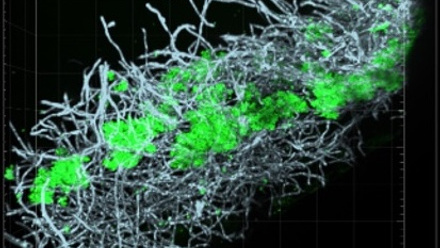
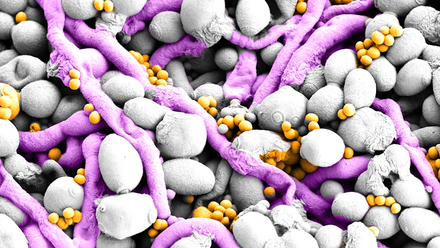
Stephen and Shafi will give their award presentations, ‘Interkingdom Cross-Talk Between Aspergillus fumigatus and Pseudomonas aeruginosa in an In Vitro Model of Respiratory Co-infection’ and ‘Cross-Kingdom Microbial Interactions Reveal Genes Driving Stress Tolerance in Aspergillus fumigatus’ at the Microbiology Society’s Annual Conference, from 13-16 April 2026, at the ICC Belfast, UK.
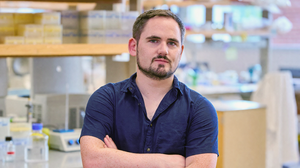
Stephen Dolan is an Assistant Professor at Clemson University, where he studies the mechanistic basis of fungal–bacterial interactions during human infection. His research focuses on how microbial physiology is altered within complex communities, using clinically relevant models of respiratory infection to understand how co-infecting organisms such as Aspergillus fumigatus and Pseudomonas aeruginosa influence one another.
Prior to this, he was a Cystic Fibrosis Foundation postdoctoral fellow in Dr. Marvin Whiteley’s laboratory at Georgia Tech and the Emory-Children’s Cystic Fibrosis Center. He previously held a Herchel Smith Postdoctoral Research Fellowship at the University of Cambridge, hosted in the Welch laboratory, where he examined the physiology of Pseudomonas aeruginosa both in isolation and in polymicrobial interactions. Stephen completed his PhD at Maynooth University, Ireland, under the supervision of Dr. Sean Doyle, where he used comparative ‘omics and reverse genetics to study toxin regulation in A. fumigatus.
Stephen said of the award: “I’m very grateful to receive the Tony Trinci Award from the British Mycological Society and the Microbiology Society. It is a real honour to be recognised in the name of Professor Trinci, whose work helped shape our understanding of fungal growth by linking underlying cellular processes to complex biological behaviour.
My research explores how fungi behave within polymicrobial communities during infection, particularly how interactions with bacteria influence their physiology. I’m very thankful to the mentors, collaborators, and trainees who have supported this work, and I hope to continue contributing, in a small way, to our understanding of fungal biology and its relevance to human health.”
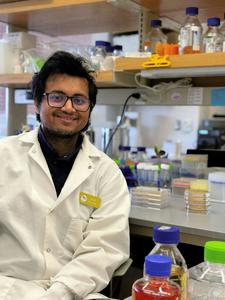
Shafi Mondal completed his bachelor’s and master’s degrees in Biochemistry and Molecular Biology at the University of Dhaka, Bangladesh, and is currently pursuing a PhD in Stephen Dolan’s lab at Clemson University, USA. He says: “My doctoral research focuses on polymicrobial interactions involving the human pathogenic fungus Aspergillus fumigatus. In particular, I investigate how A. fumigatus remodels its transcriptional landscape in the presence of bacterial species commonly found in the cystic fibrosis lung, and how these changes contribute to tolerance against clinically and environmentally relevant stressors.
My broader research interests focus on antifungal drug discovery and the evolution of fungal pathogenicity, particularly how environmental fungi emerge as human pathogens, acquire antifungal resistance, and adapt across hosts. As I continue to develop as a mycologist, I aim to contribute to our understanding of fungal physiology, evolution, and pathogenesis.”
Shafi said of the award: “I’m very grateful to receive the Tony Trinci Award at this stage of my career. It is a real honour, and I see it as an encouraging step as I continue to develop as a researcher in mycology. I hope to build on this work and contribute in a meaningful way to improving our understanding of fungal pathogens and the challenges they pose to human health.”
The President of the British Mycological Society, Professor Sarah Gurr said: “The Tony Trinci Award is extended annually to celebrate excellent mycology presented at the BMS and Microbiology Society annual scientific conferences. Inevitably there is sizable competition amongst many, high-quality submitted abstracts. The abstracts from Stephen and Shafi were selected for their approach to fungal evolution, ecology and networks. I am delighted the award has gone to two such exceptional winners.”
The Chief Executive of the Microbiology Society, Dr Peter Cotgreave said: “Stephen and Shafi’s comprehensive work, rooted in experimental mycology and which advances our understanding of fungal ecology, evolution, and interactions, reflects why we created the Tony Trinci Award with the British Mycological Society. We are delighted to celebrate this outstanding mycology and investigative work with them both at Annual Conference in Belfast.”
The British Mycological Society was founded 125 years ago to promote the scientific study of fungi and has since grown to be one of the major mycological societies in the world. The Society is committed to promoting cutting-edge scientific research, fungal conservation and species recording and the provision of educational resources. As a charity and membership body, the Society is open to all who are interested in supporting, promoting and studying the diverse and fascinating fungal kingdom.
The Microbiology Society is a membership charity for scientists interested in microbes, their effects and their practical uses. It has a worldwide membership based in universities, industry, hospitals, research institutes, schools and other organisations. Our members have a unique depth and breadth of knowledge about the discipline. The Society’s role is to help unlock and harness the potential of that knowledge.
The award talks will be presented by Shafi and Stephen at 10.45 and 17.45 on Tuesday 14 April as part of the Microbiology Society’s Annual Conference at the ICC Belfast, UK.