When Bacteria are Both Susceptible and Resistant
Dr Andrew M. Edwards, Associate Professor of Molecular Microbiology at Imperial College London.
In this work, we teamed up with colleagues at the West African Centre for Cell Biology of Infectious Pathogens at the University of Ghana to study a type of antibiotic resistance that is poorly understood.
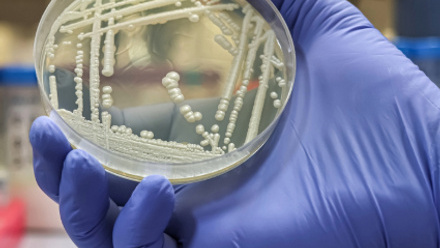
Via funding from Imperial’s Global Hub Fellows Scheme, we were able to host PhD student Eunice Ayerakwa from Dr Abiola Isawumi’s AMR Research lab in Ghana (Image 1). Dr Isawumi and colleagues have been collecting and studying bacterial isolates from hospitals in Ghana and found that they were frequently resistant to several different antibiotics. Within this collection were several isolates of Klebsiella oxytoca, which is an increasingly common cause of nosocomial infection.

The increased frequency of infections caused by bacteria resistant to multiple antibiotics has necessitated the use of second or third line antibacterials, including the polymyxins. Whilst polymyxins were discovered in the 1940s, their use in humans was minimal for many decades due to concerns over toxicity and lack of efficacy. However, the emergence of infections caused by bacteria resistant to multiple antibiotics, means that these are sometimes the only viable option, especially in resource limited settings.
In this work, Eunice sought to understand polymyxin susceptibility in K. oxytoca to better understand whether this class of antibiotics represent a viable therapeutic option for this growing healthcare threat.
Our initial assays indicated that most of the isolates displayed a variable degree of susceptibility to polymyxin antibiotics, producing what is known as a ‘skipped well’ phenotype in broth microdilution assays. Subsequent assays using population analysis profiling revealed that all six of the isolates examined contained a polymyxin resistant sub-population of cells. This sub-population consistently emerged in the bulk population, regardless of bacterial growth phase or in the presence of human serum and had a stably resistant phenotype. Working with Ed Douglas and Gerald Larrouy-Maumus at Imperial, Eunice found that the LPS of the resistant sub-population was modified with cationic arabinose moieties, which likely mediates the resistance phenotype.
In summary, this study identified a high frequency of polymyxin heteroresistance in K. oxytoca isolates from Ghanaian hospitals, which suggests that polymyxin antibiotics are unlikely to be an effective therapeutic approach. It also indicates that larger surveillance studies are required to fully understand the prevalence of this phenotype. Previous work has found polymyxin heteroresistance in other Klebsiella spp but estimates of the prevalence vary significantly between geographic locations. As such, much more work is needed to understand the drivers of polymyxin heteroresistance and the threat it poses to effective treatment of patients infected with Klebsiella and similar bacteria.
Micro Scopes
Micro Scopes is an ongoing blog series by the Microbiology Society, written by microbiologists. This series brings you the latest and most exciting scientific findings published in the Society's journals and spotlights the perspectives of microbiologists around the world on their latest research.