New to Science: The latest discoveries from around the world
Heatwaves have hit the Microbiology Society HQ in London this week, with temperatures breaking records, so we’ll start with the discovery of a real heat lover: the novel thermophilic species, Thermus javaensis, was found at the Cisolok Geyser in a sample of litter in West Java, Indonesia. Researchers are working to improve understanding of the underexplored geothermal ecosystems of Southeast Asia. The Cisolok Geyser is a unique and organic litter-rich environment, holding promise for novel thermophilic species. And that is just what they found: T. javaensis is a Gram-negative, aerobic bacterium which can grow at temperatures between 45-80° C. It joins a genus of thermophiles, which has become a point of interest for research due to its biotechnological potential, with other members being used in the food and pharmaceutical industries.
Elsewhere in Asia, researchers have identified a novel actinomycetes bacterium while sampling in a karst cave in China, where previously the cranium of an ancient hominin was discovered in the 1950's. The age of the 'Maba Man' is still uncertain but is estimated to be from roughly 130-300 thousand years old. Researchers set out to investigate the actinomycete diversity in karst caves; extreme environments where energy sources and nutrients originate only from atmospheric gases, descending surface water, or from the rock itself. Out of 84 strains isolated, two belonged to the novel species, Streptomyces mabaensis. An analysis of natural secondary metabolites encoded by S. mabaensis shows distinct metabolites from reference Streptomyces species, potentially promising for future research into natural product production.
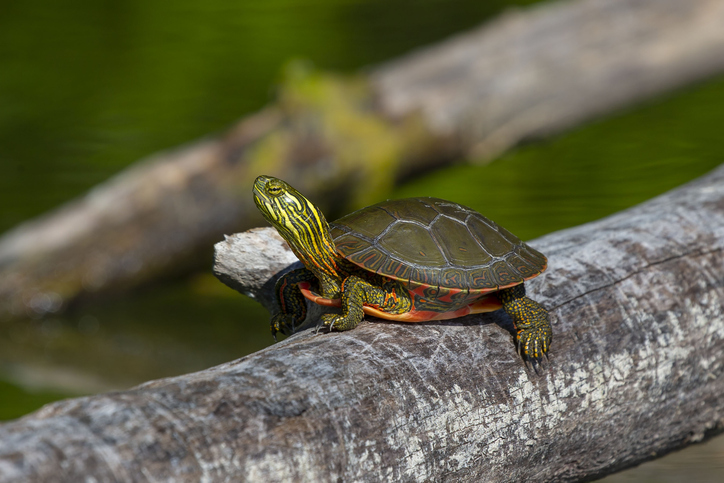
A painted turtle. Credit: iStock/Karel Bock
Next up, a novel bacterial species has been named Stenotropomonas testudinis, based on the Latin name, testudinis, to originate from a certain animal: Can you guess which? That’s right, the correct answer is the tortoise! Researchers set out to isolate and characterise antibiotic resistant bacteria from painted turtles in Wisconsin. The genus Stenotrophomonas is known to exist in diverse environments, including S. maltophilia, an opportunistic pathogen with intrinsic resistance to beta-lactam, aminoglycoside and quinolone antibiotics. Researchers identified that this isolated strain of S. testudinis also carries resistance to three carbapenem antibiotics.
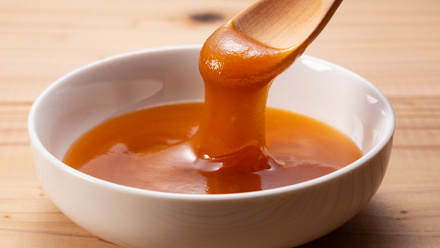
From the outdoors to the indoors, a discovery from inside the kitchen: a novel halophilic bacterium was isolated from traditional fermented fish, a dish known as pla-ra, in Thailand. The newbie joins a small genus of eleven species that have been isolated from a wide range of locations, from human blood to pasteurised milk to saline soil. As for discoveries from Thai fermented foods, Ornithinibacillus proteolyticus isn't the first; other protease-producing bacteria have been isolated from it, which are beneficial for protein hydrolysis in the food industry. Analysis shows O. proteolyticus does in fact show promise for accelerating fermentation, enhancing flavour and improving digestibility for fermented foods. The researchers see potential for the novel bacterium to be applied to plant-based proteins and dairy alternatives in the future.
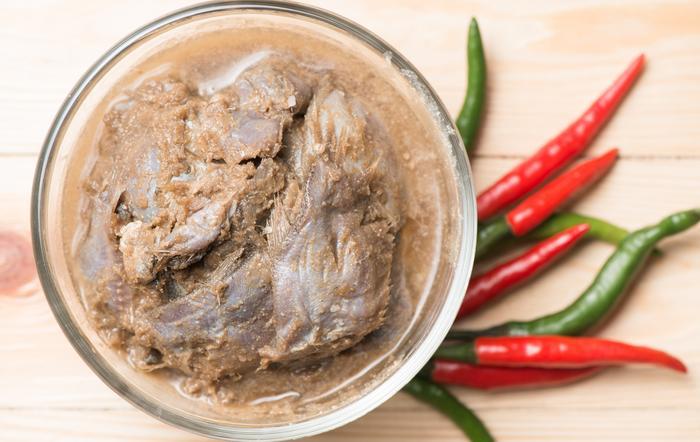
Traditional Thai fermented fish, pla-ra. Credit: iStock/kwanchaichaiudom
The food-themed discoveries don't stop there, our final discovery is a novel fungal species, Banningia arbuti, isolated from strawberry trees (Arbutus unedo) in Portugal. Not to be confused with actual strawberries, the native Mediterranean tree is known to produce small red berries that bear some resemblance to strawberries, hence the common name. Preliminary analysis identified B. arbuti as a close relative of B. maryelizabethiae, a species originally found in Australia, but which lacked detailed morphological information. Researchers sourced an isolate of B. maryelizabethiae to additionally provide its first comprehensive characterisation, alongside the new species. Their examinations clarify a differentiation between the two species through their morphologies.
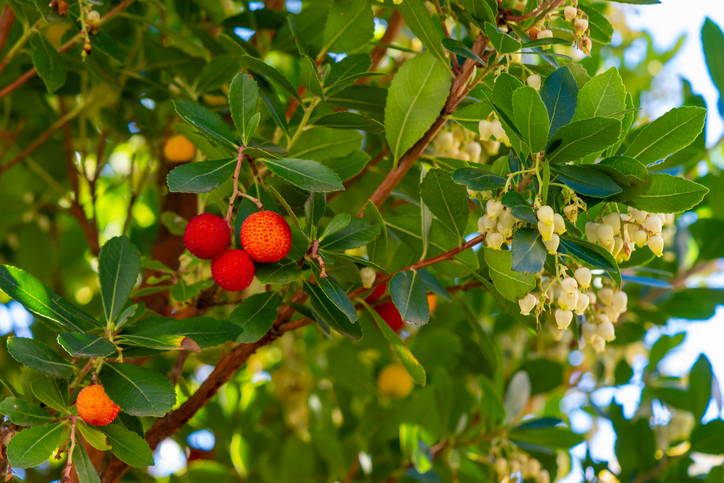
Fruit on a strawberry tree. Credit: iStock/HJBC
New to Science
Each month, the Microbiology Society publishes the International Journal of Systematic and Evolutionary Microbiology, which details newly discovered species of bacteria, fungi and protists. New to Science is a blog series unravelling these latest discoveries every month.