New to Science: The latest discoveries from around the world
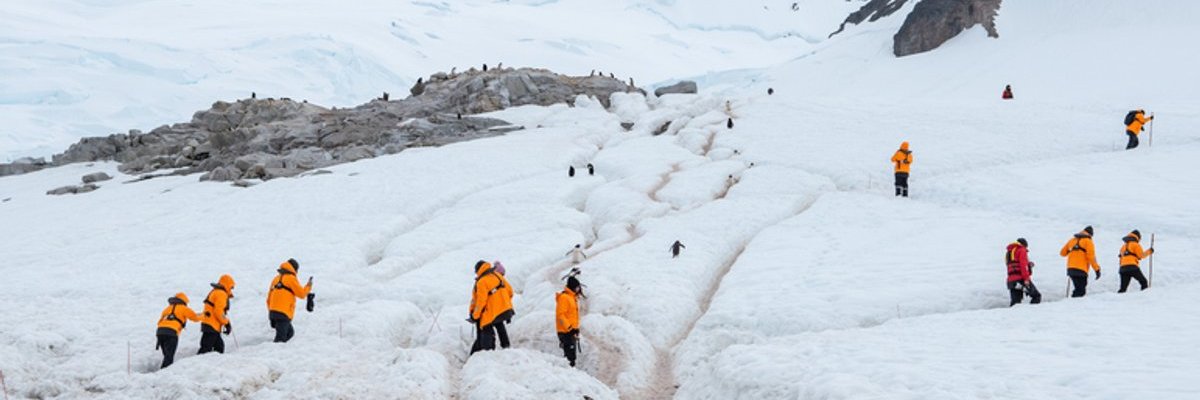
Our Microbe of the Month for March is the novel extremophile, Deinococcus pantiae, a bacterial species identified from sampling an Antarctic lake in Queen Maud Land, northern Antarctica. A group of scientists from the National Centre for Cell Science, India, isolated and analysed the bacterium to understand its extremo-tolerance mechanisms further. What they found was fascinating: not only is the microbe was predictably UV resistant, living in a high exposure area, but also antibiotic resistant. The strain carried resistance to vancomycin, an antibiotic commonly used to treat a variety of infections, particularly by MRSA. To honour the foundations of this research, the team dedicated the name of the novel species to Dr Aditi Pant, an oceanographer and the first female Indian scientist to visit Antarctica during the third Indian Scientific Expedition to Antarctica in 1983. Pant follows in the footsteps of the first woman on Antarctica, Danish-Norwegian explorer Caroline Mikkelsen, in 1935. Now, their legacy lives on strong: as of 2016, a third of all researchers at the South Pole were women.

From one pole to the other, the Arctic represents a similarly inhospitable environment, although also it hosts a variety of highly adapted microorganisms. Sampling of Peary Island, Greenland, Danish scientists identified two more such bacteria Arthrobacter arnarulunnguaqa and Nesterenkonia maliinae. Both are Gram-positive, halotolerant, psychrotolerant and alkaliphilic. N. maliinae was named after Maliina, the Sun goddess in Inuit mythology - in allusion to the warm orange colour of its colonies - and A. arnarulunnguaqae was also named in honour of Arnarulunnguaq, the native Greenlandic explorer who played a key role in the Fifth Thule Expedition in 1921.
Not only are there new bacterial species this month, but a novel archaeon! A new species and genus have been proposed after a cross-institutional team of scientists in China isolated two strains of archaea from two salt mines in the west of the country, 2000km apart. Alosubterraneus shenae was identified as Gram-negative, non-motile under optimal growth conditions, and to have red colonies. Numerous studies have revealed halophilic archaea across hypersaline environments, many of which have since gained biotechnological applications. In this study, A. shenae was additionally analysed to confirm it possessed key enzymatic genes involved in bacterioruberin biosynthesis. Bacterioruberin is a carotenoid pigment that has recently been studied extensively for its potent antioxidant properties. Its extract has been shown to exhibit amazing antiviral, antidiabetic, antibacterial, and anti-inflammatory effects, which makes archaea that are capable of naturally synthesising bacterioruberin as potentially valuable.
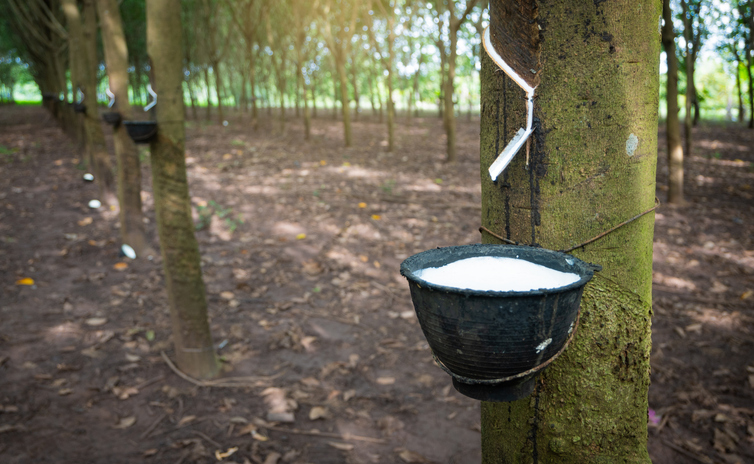
Another novel species with a unique ability, Thai scientists have discovered two Gordonia bacterial species that are able to degrade rubber, from sampling soil in para rubber plantations in the northern part of Thailand. Both Gordonia heveisoli and Gordonia gummivorans are Gram-positive, aerobic and non-motile bacteria. They were detected to encode the latex-clearing protein (lcp) gene, which encodes a key enzyme in rubber degradation. This protein has been previously identified to be capable of biodegrading not just natural rubber, but the more difficult synthetic rubber.
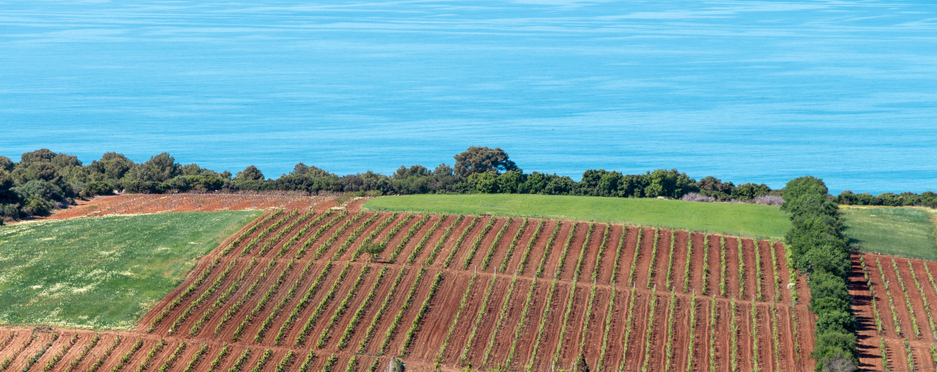
Last but not least, a novel bacterial species of a rare genus was isolated from a vineyard in Mostaganem, northern Algeria, belonging to the Saccharothrix genus of the Actinomycetota phylum. Saccharothrix sabaoui is a Gram-positive bacterium, characterised by irregular aerial mycelial filaments. Rare actinobacteria are gaining more attention in research recently, due to their unique characteristics and potential applications. The species may be of interest for further investigation for compound production, as the Sacchrothrix genus has been responsible for the isolation and production of 85 compounds so far.
New to Science
Each month, the Microbiology Society publishes the International Journal of Systematic and Evolutionary Microbiology, which details newly discovered species of bacteria, fungi and protists. New to Science is a blog series unravelling these latest microbial discoveries every month.