New to Science: The latest microbial discoveries around the world
There is a whole new host of microbial discoveries to delve into this month; let’s start close to home with a discovery from the human gut microbiome! Sulphate-reducing bacteria may only have a minor presence in the gut, but they play an important role in producing hydrogen sulfide, signaling molecules for cytoprotection and epithelial energy homeostasis. However, too high a population can cause gut dysregulation and has been linked to inflammatory bowel disease, Crohn's disease and Parkinson's disease. Members of the genus Desulfrovibrio are the predominant sulphate-reducing bacteria in the gut. A team of researchers in the UK set out to better understand the diversity of Desulfovibrio in the microbiome, and subsequently isolated three novel species: Desulfovibrio intestinivivus, Desulfovibrio desulfopostgatei, and Desulfovibrio faecalis. All three are characterised as Gram-negative, anaerobic and catalase negative.
Next up, the discovery of a novel yeast species! This new member of the Sungouiella has been recovered from wastewater of a public hospital in Brazil. This genus have been isolated from diverse sources, including insects, mushrooms, and glaciers. Though it has been largely identified from environmental samples, there is growing evidence, however, that some species are opportunistic human pathogens. This team of researchers set out to monitor hospital waste for surveillance of pathogenic species and antifungal resistance when they isolated the novel Sungouiella purgamenti. The new species exhibits multi-lateral budding and grows smooth cream colonies. However, based just on genomic analysis, the researchers indicate that S. purgamenti is not virulent.

Back to bacteria, Acinetobacter is known as a wide and diverse genus containing members that are important soil bacteria to serious hospital infection-causing species. The newest additions to the genus, Acinetobacter legionensis and Acinetobacter psychrotolerans, were isolated from various fresh meat and meat preparation samples from supermarkets in Leon, Spain. Although Acinetobacter species are not readily associated with causing food poisoning, meat can be frequently contaminated by Acinetobacter during processing. However, research into this genus outside of a clinical setting remains limited. The researchers characterise the novel A. legionensis and A. psychrotolerans as Gram-negative, non-motile and aerobic.
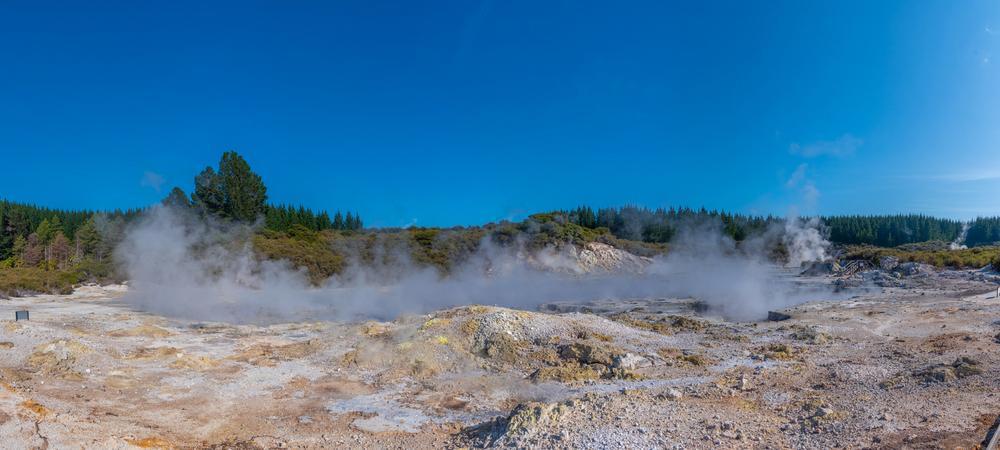
From a big family to a small one, researchers have isolated a novel archaeon species belonging to an order comprising of just a single family and two genera. Infirmifilum tikiterense was recovered from the fiery pits of the 'Cooking Pots' hot springs at Hell's Gate in Tikitere, New Zealand, from which it gets its name. It joins the tight-knit family of rod-shaped hyperthermophiles and obligate anaerobes. It is able to grow at temperatures ranging from 60° to 97°, with an optimum between 80° -85°.
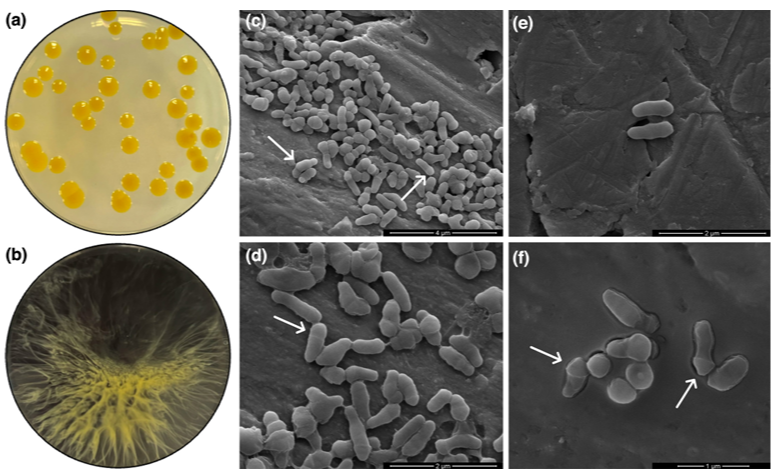
Finally, talking of small genera from the opposite extreme, we have a discovery of a novel bacterium from Antarctica, Rhodoglobus galactosidasius, joining a genus of two species. Though it belongs to the huge class of Actinomycetes, the Rhodoglobus genus is highly specialised to its Antarctic environment, with all three species isolated from the continent. The novel R. galactosidasius is characterised as Gram-positive, aerobic and growing at an optimal temperature of 15°. It also exhibits activity of a beta-galactosidase enzyme that is activated by cold conditions. Bacterial diversity in Antarctica remains largely underexplored by the scientific community, with an estimate of more than half of microbial species yet to be described. Studies like this one bring us one exciting step closer to unravelling the complex microbiome of such extreme environments.
New to Science
Each month, the Microbiology Society publishes the International Journal of Systematic and Evolutionary Microbiology, which details newly discovered species of bacteria, fungi and protists. New to Science is a monthly blog series unravelling these latest microbial discoveries.