New to Science: The latest microbial discoveries around the world
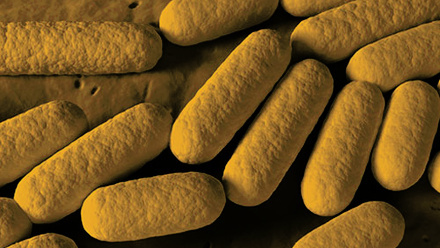
Did you know that the Sahara Desert comprises not only of rolling sand dunes, but a variety of distinct ecoregions including coastal desert, woodland, and seasonally flooded saline areas? That makes it home to a diverse range of microorganisms, including salt-loving halophilic bacteria, like our Microbe of the Month Actinopolyspora sabaoui, The researchers behind the discovery are aiming to improve the understanding of Actinobacteria diversity from the desert that covers over 90% of the country. Members of this genus all possess the same love of salt, previously identified from salt lakes, salt flats and saline soils. Halophilic Actinobacteria have attracted great attention from scientists because of their production of various bioactive natural compounds, such as antibiotics and antivirals.

From the largest hot desert to the largest cold, researchers in Antarctica have isolated a novel bacterial species with an antimicrobial resistance gene from the gut of the endemic insect, the Antarctic midge. The species joins the genus Yersinia, Gram-negative facultatively anaerobic bacteria. The most well-known member of this group is likely Yersinia pestis, which is responsible for plague. A key characteristic of the genus is psychrotolerance, allowing survival at low temperatures. An intriguing finding of the novel Yersinia antarctica was the temperature-dependent inducibility of its antimicrobial resistance gene, ampC. This gene encodes a beta-lactamase enzyme, which confers resistance to beta-lactam and cephalosporin antibiotics. Though this is the first detection of this species in Antarctica, publicly available genomes indicate the presence of Y. antarctica in continental Russia and the Russian Arctic as well.

Away from the wild deserts, the next discovery was made from something we might find in our own backyard. Researchers have discovered a novel species in the rhizosphere of a tomato plant with a potentially powerful use: Pseudoneobacillus rhizolycopersici possesses both plant growth-promoting and wilt-reducing abilities. The team tested these abilities because the family, Bacillaceae, contains several important plant growth-promoting rhizobacteria and biocontrol agents. Researchers conducted a pot experiment with the novel strain and the pathogen Ralstonia solanacearum. What they found was P. rhizolycopersici significantly reduced the incidence of tomato wilt caused by R. solanacearum by nearly 90%. Furthermore, the species also enhanced tomato root and total plant biomass. The strain did not, however, exhibit direct antimicrobial activity against R. solanacearum. Instead, previous studies have shown that biocontrol bacteria can work through other indirect mechanisms, such as niche competition, induction of plant immunity, and enhancement of nutrient uptake.
Next up, a novel bacterial species was identified from a 'mother of vinegar' produced from an artisanal acetification process in Faro, southern Portugal. The 'mother' is a biofilm consisting of cellulose, yeast and bacteria that forms during the process of converting alcohol to acetic acid, the main component of vinegar. In Faro, the artisans use beer, grapes and pomegranate as starting materials for their vinegar production. The novel Komagataeibacter ossonobensis joins the family Acetobacteraceae, which includes many known acetic acid bacteria. Their ability to produce acetic acid and extracellular cellulose is evidently useful, applied not just to the production of vinegars but also to other food products, clinical agents and industrial chemicals. K. ossonobensis is described as Gram-negative, non-motile and non-spore-forming.

Last but not least, this final discovery is a novel fungal species hailing from the mangrove trees of eastern Thailand. Clonostachys kasetsartana joins a genus of diverse filamentous fungi that are found in various ecosystems worldwide. Species of this genus are extremely versatile and have been reported to inhabit plants mutualistically as endophytes and epiphytes; to be pathogens of insects, plants and other fungi; and to be carnivorous nematophagous fungi. C. kaesetsartana is described as epiphytic to mangrove trees, living on their leaf surface.
New to Science
Each month, the Microbiology Society publishes the International Journal of Systematic and Evolutionary Microbiology, which details newly discovered species of bacteria, fungi and protists. New to Science is a monthly blog series unravelling these latest microbial discoveries.