New to Science: The latest microbial discoveries from around the world
The weather has been wet and windy at the Microbiology Society HQ in London, but that won't stop us from enjoying a whole new months' worth of new microbes!
Starting off in China, during a survey of yeast diversity in Xijiu Town, a novel yeast species Blastobotrys xijiuensis was discovered from a workshop making Daqu, a fermentation starter that is used in the making of Chinese liquor. Daqu, which takes the form of a solid brick, is made commonly made from wheat or barley and mixed with fungi, yeasts and bacteria that form the functional microbiota needed for alcohol fermentation and flavouring. A single strain was isolated from residual powder collected on brooms used in the building. B. xijiuensis takes its new name from the city in which it was found and is described as non-sexual, has ovoid to ellipsoidal cells, and reproduces by multilateral budding.

Across the Pacific to the United States, two novel species identified from human skin and nostrils join the genus Corynebacterium, a large grouping of over 150 species. Despite its most infamous member, Corynebacterium diphtheriae, causing the fatal infection diphtheria, most members of the genus are not pathogenic. The newly found Corynebacterium hallucis and Corynebacterium nasorum are closely related to Corynebacterium tuberculostearicum, a common inhabitant of human skin. The newest members gain their names from the body part they were isolated from: C. hallucis gets its name from the hallux, the big toe, and C. nasorum from the nose. Both are described as Gram-positive, catalase-positive, and non-spore-forming.
As for the rest of this month's discoveries, they all have one thing in common: they were all discovered in aquatic environments! Starting off in Slovenia, during a surveillance study of Campylobacter bacteria in the country's environmental waters, the novel Campylobacter aecornae joins a genus primarily isolated from animals and water bodies. Those with primarily zoonotic reservoirs tend to be linked to human disease, such as the diarrhoea-causing Campylobacter coli. C. aecornae is described as Gram-negative, non-spore-forming, with curved rod-shaped cells. Its name pays homage to the ancient river goddess Aecorna from the Illyrian mythology of the region.
Freshwater lakes are also important sites for studying microorganisms involved in organic-matter transformation and carbon cycling, converting organic carbon into reduced end-products, like methane. Meromictic lakes, in which the layers of water do not intermix, are particularly informative systems to study anaerobic microbial processes because the deep waters of these lakes can become deoxygenated. During an investigation of anaerobic microbes in France's meromictic Lake Pavin, researchers isolated a novel species through sampling its diverse microbiome. Hydrogenimesophilus fermentans is described as strictly anaerobic, Gram-negative, and motile. The new bacterium fermented glucose with the production of butyrate and propionate as end-products, together with CO2 and H2. H2 is especially relevant in anoxic environments like this, because it can act as an electron donour for several anaerobic metabolisms.

A novel bacterium, Ureaplasma rhincodontis, was isolated from the faeces of a whale shark. Researchers were studying the microbiome of the animal by sampling the faeces of two captive sharks in Osaka Aquarium, Japan. All ten known Ureaplasma species have been recovered from homeothermic vertebrates, animals that are able to maintain internal temperature homeostasis regardless of the environment. This discovery is the first report of a Ureaplasma bacterium from a poikilothermic vertebrate, those whose internal temperature varies – otherwise known as cold-blooded. Members of the genus are described as non-motile, chemoorganotrophs, and facultative anaerobes. The novel U. rhincodontis is named after the species in which it was found, Rhincodon typus.
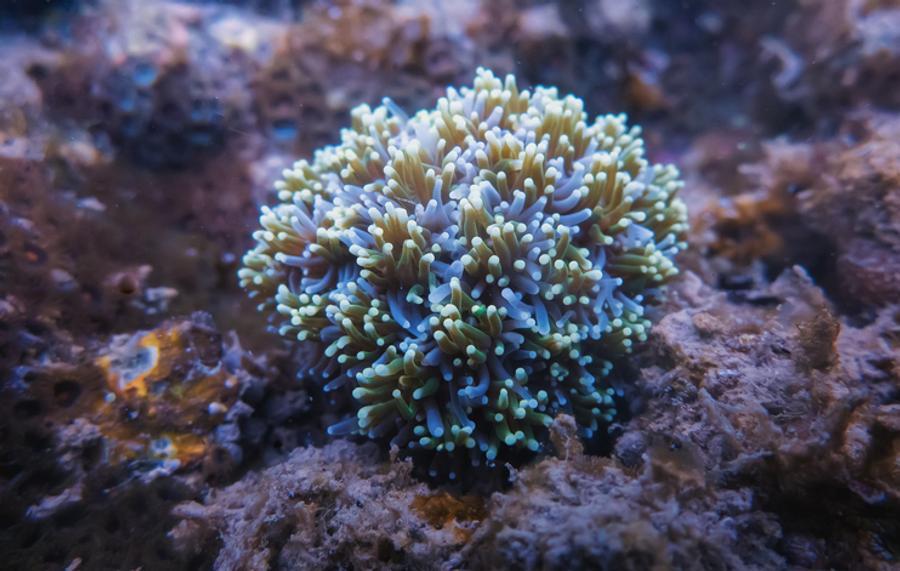
Scientists have discovered the latest member of the Vibrio genus in the depth of the South China Sea, in the gastric cavity of the stony coral, Galaxea fascicularis. The novel Vibrio coralinecrosis joins a diverse genus that plays a dual role in the marine ecosystem – on one hand, they are involved in organic matter remineralisation and nutrient cycling, and on the other, can act as opportunistic pathogens. During analysis of the isolate, researchers identified the bacterium as indeed a coral pathogen, demonstrating that elevated temperature significantly enhances its virulence and leads to rapid tissue loss in the host. Named after this virulent trait, V. coralnecrosis is described as Gram-negative, facultatively anaerobic and motile.
New to Science
Each month, the Microbiology Society publishes the International Journal of Systematic and Evolutionary Microbiology, which details newly discovered species of bacteria, fungi and protists. New to Science is a monthly blog series unravelling these latest microbial discoveries.