Bird flu in dairy cows: what do we know so far?
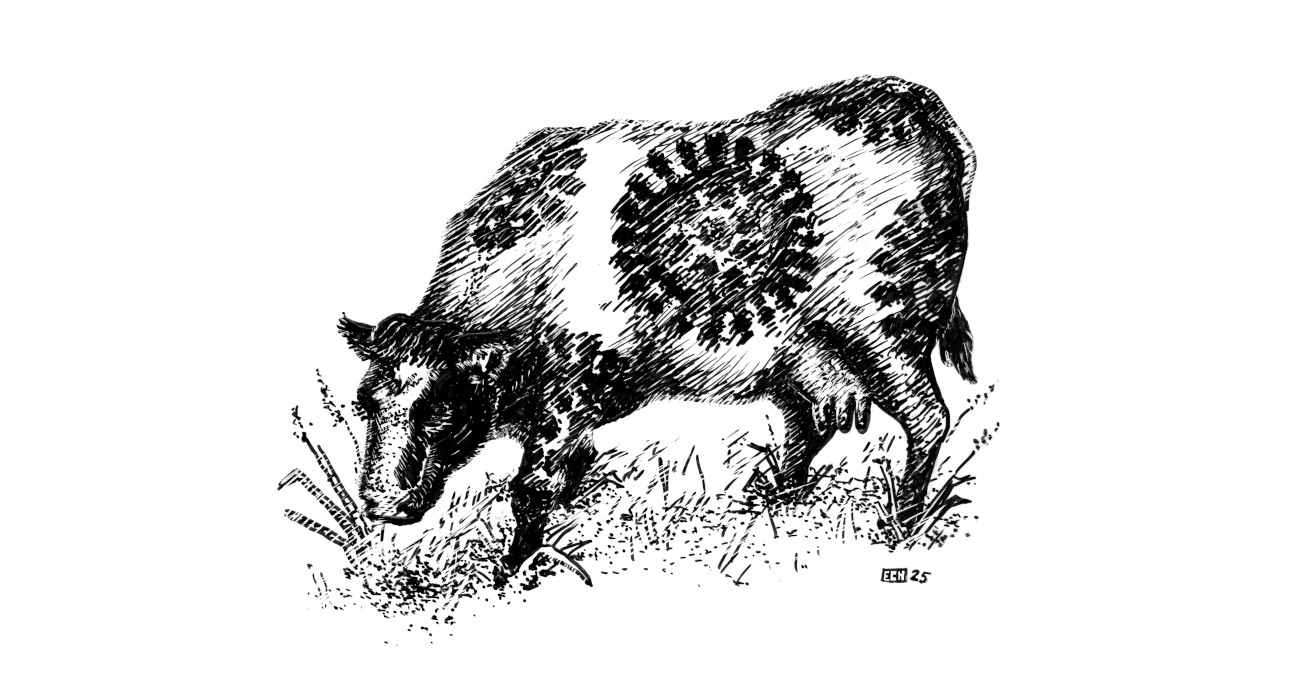
Over the last few years, the H5N1 avian influenza has caused a major global outbreak in wild birds and poultry. As the virus has spread, it has also infected a number of mammalian species that we would not traditionally associate with avian influenza. Perhaps the most surprising has been its emergence in dairy cattle in the United States, where the virus has been able to spread between herds.
Importantly, infected cattle can shed very high levels of virus into their milk, and milk and milking practices appear to play an important role in transmission between animals and dairy farms. This also creates opportunities for human exposure, both for people working with infected cattle and milk-derived products, as well as for consumers of unpasteurised milk. We have previously published work on the survival of influenza during pasteurisation and the stability of the virus in milk.
Occasional infections have been detected in people with occupational exposure to infected animals. This raised an important research question: is susceptibility limited to these US-bred cows, or could cattle around the world also be infected?
How can bird flu even infect cows?
Influenza viruses infect their hosts by using their surface protein, called haemagglutinin, that is specifically adapted to recognise and attach to common receptors on the cell surface of host tissues. The H5N1 avian viruses usually prefer one form of these receptors, while the human version of the viruses tend to prefer another.
However, these receptors are not unique to birds or humans, and other animals can carry similar forms in some of their tissues. This means that, under the right circumstances, an avian influenza virus can infect a new, non-avian host - an event known as spillover. Unlike the predominantly respiratory route of infection typically associated with H5N1, infection in cattle shows a marked affinity, or tropism, for the mammary gland. Importantly, the mammary gland of the cow can display both avian- and human-associated receptor types.
What did our latest research focus on?
To answer our research question in our latest paper, we collected and cultured mammary tissues from Aberdeen Angus, Holstein Friesian, and Limousin cattle, and exposed them to attenuated, laboratory-generated viruses carrying the H5N1 surface proteins. We also looked at the types of receptors present in the tissue, because these help determine which influenza viruses are able to infect cells. This allowed us to ask not only whether H5N1-like viruses could infect these tissues, but also whether the cow udder might be susceptible to a broader range of influenza viruses.
What did we find out about the susceptibility of different breeds?
First, we showed that both receptor types are present in mammary tissue from Aberdeen Angus and Limousin cattle (two breeds broadly used for meat production), as well as Holstein Friesian (a dairy breed). This suggests that the udder could potentially support infection by influenza viruses that had adapted to these cattle breeds used in different agricultural settings. Second, we showed that mammary tissues obtained from the three breeds could be infected by viruses carrying H5N1 surface proteins.
Importantly, our results do not mean that every exposure will lead to infection or onward transmission, but it helps explain how a virus that evolved to infect mainly birds can sometimes gain access to and infect cow cells.
Why is it important to study whether different breeds of cattle are susceptible to H5N1 infection?
The current H5N1 outbreak in cattle has mainly been reported in dairy herds in the United States. However, cattle breeds differ around the world, and many beef breeds are kept in areas where H5N1 is also circulating in wild birds.
Indeed, H5N1 infections of livestock have been reported outside the USA, such as in the Netherlands, highlighting the risk of the infection becoming established elsewhere. It is therefore important to know whether susceptibility is limited to the dairy breeds affected in the US outbreak already affected, or whether other cattle breeds may also be susceptible to infection.
In our study, we focused on cattle breeds commonly farmed in the UK and other countries. Our results suggest that mammary-tissue susceptibility is not obviously restricted to dairy breeds and supports including a broader range of cattle in H5N1 surveillance and risk assessment.
What does this mean for transmissions to people?
It is important to emphasise that our study does not show that the cattle breeds we studied are more likely to transmit H5N1 to people. What they do suggest is that mammary tissue from a wider range of cattle may be susceptible to H5N1 infection, potentially creating more opportunities for people who work closely with infected animals to be exposed.
During the outbreak in US dairy cattle, human infections have mainly been detected in dairy workers. These cattle-associated infections have generally been mild and short-lived, most commonly causing conjunctivitis (red or irritated eyes) and sometimes mild respiratory symptoms. While this is reassuring in terms of what has happened so far, H5N1 has caused severe disease in people historically, so we must try our best to prevent every opportunity for the virus to cross from animals into humans.
If H5N1 were to establish itself in other cattle breeds, including beef cattle, that could potentially create new opportunities for occupational exposure. This is why surveillance of cattle, appropriate biosecurity measures to limit transmission and protection of people working closely with infected animals are important, even though there is currently no evidence that our findings translate into increased human-to-human transmission.
What does this mean for surveillance and control?
A One Health approach is important because influenza viruses like H5N1 do not stay within a single species. The same virus can circulate in wild birds, spill over into wildlife and domestic animals, including livestock such as cattle, and occasionally infect people who have close contact with infected animals. Surveillance therefore works best when information from animal health, public health and wildlife monitoring is considered together, rather than in isolation.
Micro Scopes
Micro Scopes is an ongoing blog series by the Microbiology Society, written by microbiologists. This series brings you the latest and most exciting scientific findings published in the Society's journals and spotlights the perspectives of microbiologists around the world on their latest research.