Can MALDI-TOF MS tell us sooner if Candida is resistant to fluconazole?
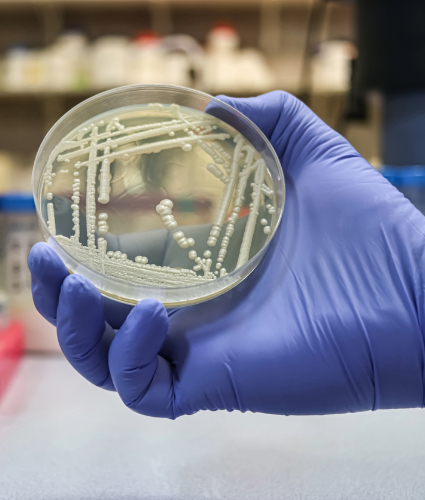
Every hour matters when treating a patient with a serious fungal infection. Today, many clinical microbiology laboratories can identify a Candida isolate within minutes using MALDI-TOF MS. But answering the next crucial question, whether that isolate is susceptible or resistant to fluconazole, usually still takes at least 24 hours. That contrast made us wonder: could the same instrument already used every day for microbial identification also provide susceptibility results much sooner? That simple question became the starting point for our study.
Fluconazole remains one of the most widely used antifungal drugs for treating Candida infections. It is often the first therapeutic option because of its safety profile, oral availability and long history clinical use. However, resistance to fluconazole has become increasingly common, particularly among non-albicans Candida species, making rapid susceptibility testing more important than ever.
At the Laboratory of Fungal Investigation (LIF) at the School of Medical Sciences, University of Campinas, in São Paulo, Brazil, we have been exploring new clinical applications for MALDI-TOF MS for several years. Previous studies had already shown that the technology could be adapted for antifungal susceptibility testing, but most published workflows still relied on multiple drug concentrations and relatively long incubation periods.
Instead of creating an entirely new method, we asked a different question: could an existing workflow be simplified enough to fit better into routine laboratory practice without sacrificing reliability? Finding the answer proved more challenging than we expected.
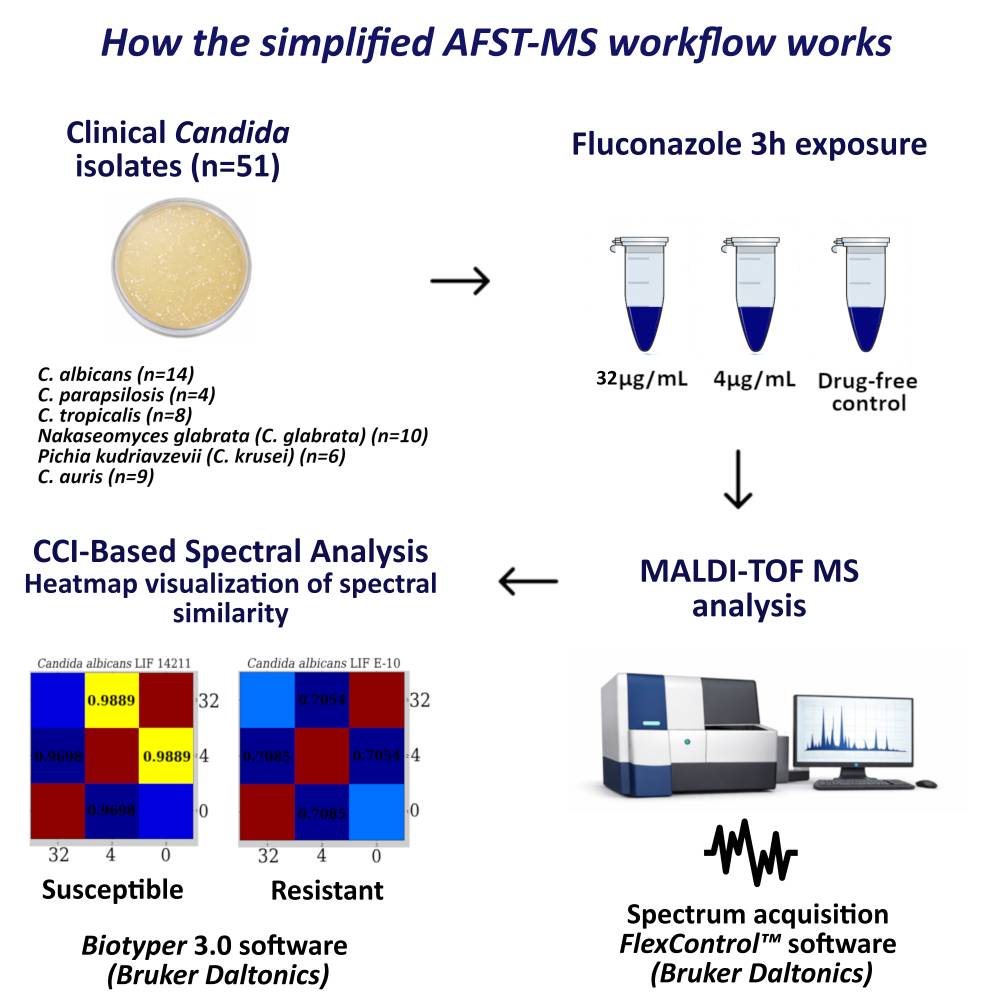
Reducing the protocol was not simply a matter of removing a few steps. Every change had to preserve the accuracy needed for clinical testing. We systematically tested shorter incubation times and found that, after just three hours of exposure to fluconazole, the protein spectra already contained enough information to distinguish the susceptibility profiles of most Candida isolates included in our study.
We also simplified the workflow by selecting only two clinically relevant fluconazole concentrations, based on the EUCAST reference method, together with a drug-free control. The goal was to create a protocol that would be practical for routine laboratories while remaining aligned with established susceptibility testing standards.
To evaluate this approach, we tested 51 clinical isolates representing six clinically important Candida species, along with quality control reference strains. Among them were two Candida albicans isolates carrying well-characterized ERG11 mutations known to confer fluconazole resistance, providing an opportunity to assess the method against genetically confirmed resistant strains.
The results were encouraging.
The simplified workflow correctly classified most isolates, showed excellent agreement for species such as Candida auris and Candida tropicalis, and did not generate any major or very major errors when compared with the EUCAST reference method. Most importantly, it reduced the time required for susceptibility assessment from around 24 hours to just three.
We do not see this method as a replacement for reference susceptibility testing. Instead, we believe it could serve as a complementary tool, providing clinically useful information much earlier while making better use of MALDI-TOF MS instruments that are already available in many microbiology laboratories. For us, one of the most rewarding aspects of this project was realizing that innovation does not always require entirely new technologies. Sometimes, meaningful advances come from looking at familiar tools from a different perspective and asking whether they can do more than we previously imagined.
We hope this work encourages other researchers to continue exploring new applications for technologies that are already part of routine clinical microbiology, helping laboratories deliver faster answers when every hour counts.
Micro Scopes
Micro Scopes is an ongoing blog series by the Microbiology Society, written by microbiologists. This series brings you the latest and most exciting scientific findings published in the Society's journals and spotlights the perspectives of microbiologists around the world on their latest research.